


Page 155 - Read Online
P. 155
Zheng et al. Soft Sci. 2026, 6, 32                                               Page 45 of 57


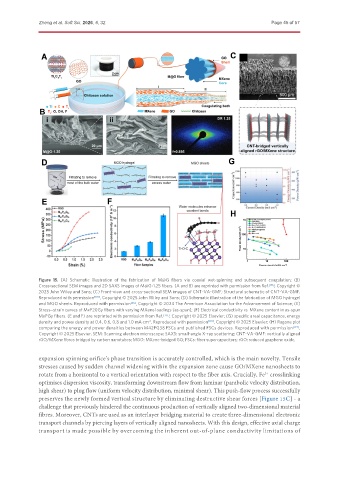
               Figure   15.   (A)   Schematic   illustration   of   the   fabrication   of   M@G   fibers   via   coaxial   wet-spinning   and   subsequent   coagulation;   (B)
               Cross-sectional SEM images and 2D SAXS images of M@G-1.25 fibers. (A and B) are reprinted with permission from Ref. [175] , Copyright ©
               2025 John Wiley and Sons; (C) Front-view and cross-sectional SEM images of CNT-VA-GMF; Structural schematic of CNT-VA-GMF.
               Reproduced with permission [176] , Copyright © 2025 John Wiley and Sons; (D) Schematic illustration of the fabrication of MGO hydrogel
               and MGO sheets. Reproduced with permission [36] , Copyright © 2024 The American Association for the Advancement of Science; (E)
               Stress–strain curves of MxP20Gy fibers with varying MXene loadings (as-spun); (F) Electrical conductivity vs. MXene content in as-spun
               MxPGy fibers. (E and F) are reprinted with permission from Ref. [177] , Copyright © 2025 Elsevier; (G) specific areal capacitance, energy
               density and power density at 0.4, 0.6, 0.8 and 1.0 mA·cm . Reproduced with permission [178] , Copyright © 2025 Elsevier; (H) Ragone plot
                                                     -2
               comparing the energy and power densities between M42PG38 FSCs and published FSCs devices. Reproduced with permission [177] ,
               Copyright © 2025 Elsevier. SEM: Scanning electron microscope; SAXS: small-angle X-ray scattering; CNT-VA-GMF: vertically aligned
               rGO/MXene fibres bridged by carbon nanotubes; MGO: MXene-bridged GO; FSCs: fiber supercapacitors; rGO: reduced graphene oxide.


               expansion spinning orifice’s phase transition is accurately controlled, which is the main novelty. Tensile
               stresses caused by sudden channel widening within the expansion zone cause GO/MXene nanosheets to
               rotate from a horizontal to a vertical orientation with respect to the fiber axis. Crucially, Fe  crosslinking
                                                                                              3+
               optimises dispersion viscosity, transforming downstream flow from laminar (parabolic velocity distribution,
               high shear) to plug flow (uniform velocity distribution, minimal shear). This push-flow process successfully
               preserves the newly formed vertical structure by eliminating destructive shear forces [Figure 15C] - a
               challenge that previously hindered the continuous production of vertically aligned two-dimensional material
               fibres. Moreover, CNTs are used as an interlayer bridging material to create three-dimensional electronic
               transport channels by piercing layers of vertically aligned nanosheets. With this design, effective axial charge
               transport is made possible by overcoming the inherent out-of-plane conductivity limitations of

