


Page 128 - Read Online
P. 128
Sun et al. Soft Sci. 2025, 5, 18  https://dx.doi.org/10.20517/ss.2024.77         Page 5 of 26


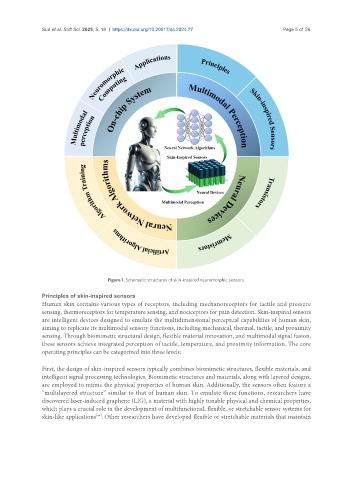
                                     Figure 1. Schematic structures of skin-inspired neuromorphic sensors.


               Principles of skin-inspired sensors
               Human skin contains various types of receptors, including mechanoreceptors for tactile and pressure
               sensing, thermoreceptors for temperature sensing, and nociceptors for pain detection. Skin-inspired sensors
               are intelligent devices designed to emulate the multidimensional perceptual capabilities of human skin,
               aiming to replicate its multimodal sensory functions, including mechanical, thermal, tactile, and proximity
               sensing. Through biomimetic structural design, flexible material innovation, and multimodal signal fusion,
               these sensors achieve integrated perception of tactile, temperature, and proximity information. The core
               operating principles can be categorized into three levels:


               First, the design of skin-inspired sensors typically combines biomimetic structures, flexible materials, and
               intelligent signal processing technologies. Biomimetic structures and materials, along with layered designs,
               are employed to mimic the physical properties of human skin. Additionally, the sensors often feature a
               “multilayered structure” similar to that of human skin. To emulate these functions, researchers have
               discovered laser-induced graphene (LIG), a material with highly tunable physical and chemical properties,
               which plays a crucial role in the development of multifunctional, flexible, or stretchable sensor systems for
                                 [44]
               skin-like applications . Other researchers have developed flexible or stretchable materials that maintain

