


Page 43 - Read Online
P. 43
Page 4 of 8                                                Kim et al. Rare Dis Orphan Drugs J. 2026;5:6


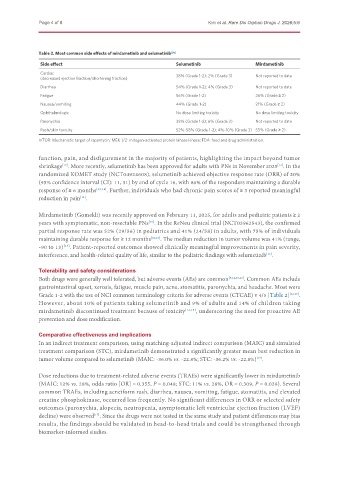
               Table 2. Most common side effects of mirdametinib and selumetinib [26]
               Side effect                                     Selumetinib                 Mirdametinib

               Cardiac                                         38% (Grade 1-2); 2% (Grade 3)  Not reported to date
               (decreased ejection fraction/shortening fraction)
               Diarrhea                                        54% (Grade 1-2); 4% (Grade 3)  Not reported to date
               Fatigue                                         56% (Grade 1-2)             26% (Grade ≥ 2)
               Nausea/vomiting                                 44% (Grade 1-2)             21% (Grade ≥ 2)
               Ophthalmologic                                  No dose limiting toxicity   No dose limiting toxicity
               Paronychia                                      38% (Grade 1-2); 6% (Grade 3)  Not reported to date
               Rash/skin toxicity                              52%-58% (Grade 1-2); 4%-10% (Grade 3) 53% (Grade ≥ 2)
               mTOR: Mechanistic target of rapamycin; MEK 1/2: mitogen-activated protein kinase kinase; FDA: food and drug administration.


               function, pain, and disfigurement in the majority of patients, highlighting the impact beyond tumor
               shrinkage . More recently, selumetinib has been approved for adults with PNs in November 2025 . In the
                                                                                                  [13]
                       [12]
               randomized KOMET study (NCT04924608), selumetinib achieved objective response rate (ORR) of 20%
               (95% confidence interval (CI): 11, 31) by end of cycle 16, with 86% of the responders maintaining a durable
               response of ≥ 6 months [13,14] . Further, individuals who had chronic pain scores of ≥ 3 reported meaningful
               reduction in pain .
                             [14]

               Mirdametinib (Gomekli) was recently approved on February 11, 2025, for adults and pediatric patients ≥ 2
               years with symptomatic, non-resectable PNs . In the ReNeu clinical trial (NCT03962543), the confirmed
                                                     [10]
               partial response rate was 52% (29/56) in pediatrics and 41% (24/58) in adults, with 75% of individuals
               maintaining durable response for ≥ 12 months [10,15] . The median reduction in tumor volume was 41% (range,
               -90 to 13) . Patient-reported outcomes showed clinically meaningful improvements in pain severity,
                       [15]
               interference, and health-related quality of life, similar to the pediatric findings with selumetinib .
                                                                                               [15]

               Tolerability and safety considerations
               Both drugs were generally well tolerated, but adverse events (AEs) are common [9,12,15,16] . Common AEs include
               gastrointestinal upset, xerosis, fatigue, muscle pain, acne, stomatitis, paronychia, and headache. Most were
               Grade 1-2 with the use of NCI common terminology criteria for adverse events (CTCAE) v 4/5 [Table 2] [12,15] .
               However, about 10% of patients taking selumetinib and 9% of adults and 14% of children taking
               mirdametinib discontinued treatment because of toxicity [12,15] , underscoring the need for proactive AE
               prevention and dose modification.


               Comparative effectiveness and implications
               In an indirect treatment comparison, using matching-adjusted indirect comparison (MAIC) and simulated
               treatment comparison (STC), mirdametinib demonstrated a significantly greater mean best reduction in
               tumor volume compared to selumetinib (MAIC: -36.0% vs. -22.8%; STC: -36.2% vs. -22.8%) .
                                                                                           [17]
               Dose reductions due to treatment-related adverse events (TRAEs) were significantly lower in mirdametinib
               (MAIC: 12% vs. 28%, odds ratio [OR] = 0.355, P = 0.048; STC: 11% vs. 28%, OR = 0.309, P = 0.028). Several
               common TRAEs, including acneiform rash, diarrhea, nausea, vomiting, fatigue, stomatitis, and elevated
               creatine phosphokinase, occurred less frequently. No significant differences in ORR or selected safety
               outcomes (paronychia, alopecia, neutropenia, asymptomatic left ventricular ejection fraction (LVEF)
               decline) were observed . Since the drugs were not tested in the same study and patient differences may bias
                                  [17]
               results, the findings should be validated in head-to-head trials and could be strengthened through
               biomarker-informed studies.

