


Page 42 - Read Online
P. 42
Kim et al. Rare Dis Orphan Drugs J. 2026;5:6                                       Page 3 of 8


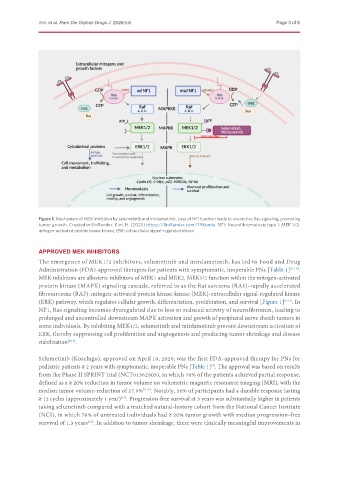
               Figure 1. Mechanism of MEK inhibition by selumetinib and mirdametinib. Loss of NF1 function leads to overactive Ras signaling, promoting
               tumor growth. Created in BioRender. Kim, H. (2025) https://BioRender.com/796ondy. NF1: Neurofibromatosis type 1; MEK 1/2:
               mitogen-activated protein kinase kinase; ERK: extracellular signal-regulated kinase.


               APPROVED MEK INHIBITORS
               The emergence of MEK1/2 inhibitors, selumetinib and mirdametinib, has led to Food and Drug
               Administration (FDA)-approved therapies for patients with symptomatic, inoperable PNs [Table 1] [9,10] .
               MEK inhibitors are allosteric inhibitors of MEK1 and MEK2. MEK1/2 function within the mitogen-activated
               protein kinase (MAPK) signaling cascade, referred to as the Rat sarcoma (RAS)-rapidly accelerated
               fibrosarcoma (RAF)-mitogen-activated protein kinase kinase (MEK)-extracellular signal-regulated kinase
               (ERK) pathway, which regulates cellular growth, differentiation, proliferation, and survival [Figure 1] [9,11] . In
               NF1, Ras signaling becomes dysregulated due to loss or reduced activity of neurofibromin, leading to
               prolonged and uncontrolled downstream MAPK activation and growth of peripheral nerve sheath tumors in
               some individuals. By inhibiting MEK1/2, selumetinib and mirdametinib prevent downstream activation of
               ERK, thereby suppressing cell proliferation and angiogenesis and producing tumor shrinkage and disease
               stabilization [9,11] .


               Selumetinib (Koselugo), approved on April 10, 2020, was the first FDA-approved therapy for PNs for
               pediatric patients ≥ 2 years with symptomatic, inoperable PNs [Table 1] . The approval was based on results
                                                                           [9]
               from the Phase II SPRINT trial (NCT01362803), in which 70% of the patients achieved partial response,
               defined as a ≥ 20% reduction in tumor volume on volumetric magnetic resonance imaging (MRI), with the
               median tumor volume-reduction of 27.9% [9,12] . Notably, 56% of participants had a durable response lasting
               ≥ 12 cycles (approximately 1 year) . Progression-free survival at 3 years was substantially higher in patients
                                           [12]
               taking selumetinib compared with a matched natural-history cohort from the National Cancer Institute
               (NCI), in which 78% of untreated individuals had ≥ 20% tumor growth with median progression-free
               survival of 1.3 years . In addition to tumor shrinkage, there were clinically meaningful improvements in
                                [12]

