


Page 95 - Read Online
P. 95
Sanal et al. Metab Target Organ Damage 2024;4:45  https://dx.doi.org/10.20517/mtod.2024.54  Page 3 of 11


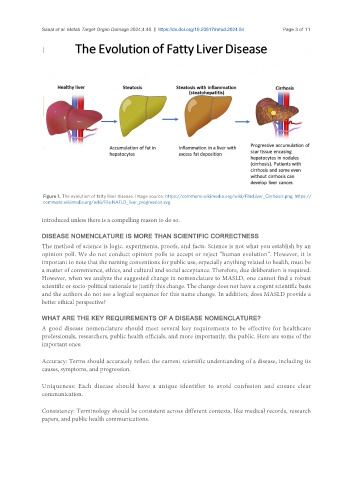
                Figure 1. The evolution of fatty liver disease. Image source: https://commons.wikimedia.org/wiki/File:Liver_Cirrhosis.png; https://
                commons.wikimedia.org/wiki/File:NAFLD_liver_progression.svg.


               introduced unless there is a compelling reason to do so.

               DISEASE NOMENCLATURE IS MORE THAN SCIENTIFIC CORRECTNESS
               The method of science is logic, experiments, proofs, and facts. Science is not what you establish by an
               opinion poll. We do not conduct opinion polls to accept or reject “human evolution”. However, it is
               important to note that the naming conventions for public use, especially anything related to health, must be
               a matter of convenience, ethics, and cultural and social acceptance. Therefore, due deliberation is required.
               However, when we analyze the suggested change in nomenclature to MASLD, one cannot find a robust
               scientific or socio-political rationale to justify this change. The change does not have a cogent scientific basis
               and the authors do not see a logical sequence for this name change. In addition, does MASLD provide a
               better ethical perspective?

               WHAT ARE THE KEY REQUIREMENTS OF A DISEASE NOMENCLATURE?
               A good disease nomenclature should meet several key requirements to be effective for healthcare
               professionals, researchers, public health officials, and more importantly, the public. Here are some of the
               important ones:

               Accuracy: Terms should accurately reflect the current scientific understanding of a disease, including its
               causes, symptoms, and progression.

               Uniqueness:  Each  disease  should  have  a  unique  identifier  to  avoid  confusion  and  ensure  clear
               communication.


               Consistency: Terminology should be consistent across different contexts, like medical records, research
               papers, and public health communications.

