


Page 28 - Read Online
P. 28
Page 8 of 18   Llamoza-Torres et al. Metab Target Organ Damage 2024;4:40  https://dx.doi.org/10.20517/mtod.2024.64

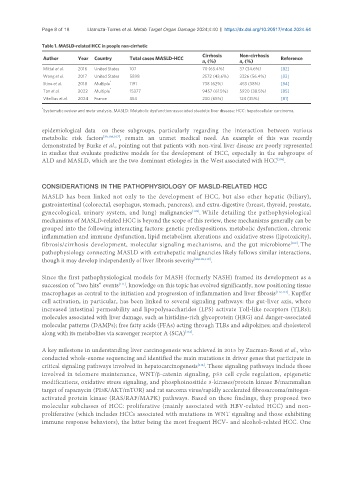
               Table 1. MASLD-related HCC in people non-cirrhotic
                                                                     Cirrhosis    Non-cirrhosis
                Author     Year  Country     Total cases MASLD-HCC                              Reference
                                                                     n, (%)       n, (%)
                Mittal et al.  2016  United States  107              70 (65.4%)   37 (34.6%)    [82]
                Wong et al.  2017  United States  5898               2572 (43,6%)  3326 (56.4%)  [83]
                                      *
                Stine et al.  2018  Multiple  1191                   738 (62%)    453 (38%)     [84]
                Tan et al.  2022  Multiple *  15377                  9457 (61.5%)  5920 (38.5%)  [85]
                Vitellius et al.  2024  France  354                  230 (65%)    124 (35%)     [81]

               *
                Systematic review and meta-analysis. MASLD: Metabolic dysfunction-associated steatotic liver disease; HCC: hepatocellular carcinoma.

               epidemiological  data    on  these  subgroups, particularly  regarding  the  interaction  between  various
               metabolic  risk  factors [39,106,107] ,  remain  an  unmet medical  need.  An  example  of  this  was  recently
               demonstrated by Burke et al., pointing out that patients with non-viral liver disease are poorly represented
               in studies that evaluate predictive models for the development of  HCC,  especially  in  the  subgroups  of
                                                                                              [108]
               ALD and MASLD, which are the two dominant etiologies in the West associated with HCC .


               CONSIDERATIONS IN THE PATHOPHYSIOLOGY OF MASLD-RELATED HCC
               MASLD has been linked not only to the development of HCC, but also other hepatic (biliary),
               gastrointestinal (colorectal, esophagus, stomach, pancreas), and extra-digestive (breast, thyroid, prostate,
               gynecological, urinary system, and lung) malignancies . While detailing the pathophysiological
                                                                  [109]
               mechanisms of MASLD-related HCC is beyond the scope of this review, these mechanisms generally can be
               grouped into the following interacting factors: genetic predispositions, metabolic dysfunction, chronic
               inflammation and immune dysfunction, lipid metabolism alterations and oxidative stress (lipotoxicity),
               fibrosis/cirrhosis development, molecular signaling mechanisms, and the gut microbiome . The
                                                                                                   [109]
               pathophysiology connecting MASLD with extrahepatic malignancies likely follows similar interactions,
               though it may develop independently of liver fibrosis severity [80,109,110] .


               Since the first pathophysiological models for MASH (formerly NASH) framed its development as a
               succession of “two hits” events , knowledge on this topic has evolved significantly, now positioning tissue
                                         [111]
               macrophages as central to the initiation and progression of inflammation and liver fibrosis [112,113] . Kupffer
               cell activation, in particular, has been linked to several signaling pathways: the gut-liver axis, where
               increased intestinal permeability and lipopolysaccharides (LPS) activate Toll-like receptors (TLRs);
               molecules associated with liver damage, such as histidine-rich glycoprotein (HRG) and danger-associated
               molecular patterns (DAMPs); free fatty acids (FFAs) acting through TLRs and adipokines; and cholesterol
               along with its metabolites via scavenger receptor A (SCA) .
                                                               [112]

               A key milestone in understanding liver carcinogenesis was achieved in 2015 by Zucman-Rossi et al., who
               conducted whole-exome sequencing and identified the main mutations in driver genes that participate in
                                                                    [114]
               critical signaling pathways involved in hepatocarcinogenesis . These signaling pathways include those
               involved in telomere maintenance, WNT/β-catenin signaling, p53 cell cycle regulation, epigenetic
               modifications, oxidative stress signaling, and phosphoinositide 3-kinases/protein kinase B/mammalian
               target of rapamycin (PI3K/AKT/mTOR) and rat sarcoma virus/rapidly accelerated fibrosarcoma/mitogen-
               activated protein kinase (RAS/RAF/MAPK) pathways. Based on these findings, they proposed two
               molecular subclasses of HCC: proliferative (mainly associated with HBV-related HCC) and non-
               proliferative (which includes HCCs associated with mutations in WNT signaling and those exhibiting
               immune response behaviors), the latter being the most frequent HCV- and alcohol-related HCC. One

