


Page 27 - Read Online
P. 27
Ballestri et al. Metab Target Organ Damage 2023;3:1  https://dx.doi.org/10.20517/mtod.2022.23  Page 15 of 22


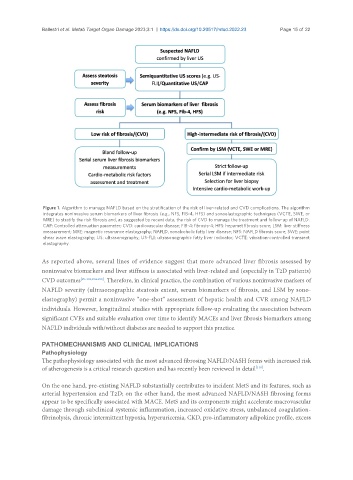
                Figure 1. Algorithm to manage NAFLD based on the stratification of the risk of liver-related and CVD complications. The algorithm
                integrates noninvasive serum biomarkers of liver fibrosis (e.g., NFS, FIB-4, HFS) and sonoelastographic techniques (VCTE, SWE, or
                MRE) to stratify the risk fibrosis and, as suggested by recent data, the risk of CVD to manage the treatment and follow-up of NAFLD.
                CAP: Controlled attenuation parameter; CVD: cardiovascular disease; FIB-4: fibrosis-4; HFS: hepamet fibrosis score; LSM: liver stiffness
                measurement; MRE: magnetic resonance elastography; NAFLD, nonalcoholic fatty liver disease; NFS: NAFLD fibrosis score; SWE: point
                shear wave elastography; US: ultrasonography; US-FLI: ultrasonographic fatty liver indicator; VCTE: vibration-controlled transient
                elastography.

               As reported above, several lines of evidence suggest that more advanced liver fibrosis assessed by
               noninvasive biomarkers and liver stiffness is associated with liver-related and (especially in T2D patients)
               CVD outcomes [95-101,104-106] . Therefore, in clinical practice, the combination of various noninvasive markers of
               NAFLD severity (ultrasonographic steatosis extent, serum biomarkers of fibrosis, and LSM by sono-
               elastography) permit a noninvasive “one-shot” assessment of hepatic health and CVR among NAFLD
               individuals. However, longitudinal studies with appropriate follow-up evaluating the association between
               significant CVEs and suitable evaluation over time to identify MACEs and liver fibrosis biomarkers among
               NAFLD individuals with/without diabetes are needed to support this practice.


               PATHOMECHANISMS AND CLINICAL IMPLICATIONS
               Pathophysiology
               The pathophysiology associated with the most advanced fibrosing NAFLD/NASH forms with increased risk
                                                                                       [118]
               of atherogenesis is a critical research question and has recently been reviewed in detail .
               On the one hand, pre-existing NAFLD substantially contributes to incident MetS and its features, such as
               arterial hypertension and T2D; on the other hand, the most advanced NAFLD/NASH fibrosing forms
               appear to be specifically associated with MACE. MetS and its components might accelerate macrovascular
               damage through subclinical systemic inflammation, increased oxidative stress, unbalanced coagulation-
               fibrinolysis, chronic intermittent hypoxia, hyperuricemia, CKD, pro-inflammatory adipokine profile, excess

