


Page 145 - Read Online
P. 145
Linehan et al. Microbiome Res Rep. 2025;4:24  https://dx.doi.org/10.20517/mrr.2024.92  Page 11 of 20


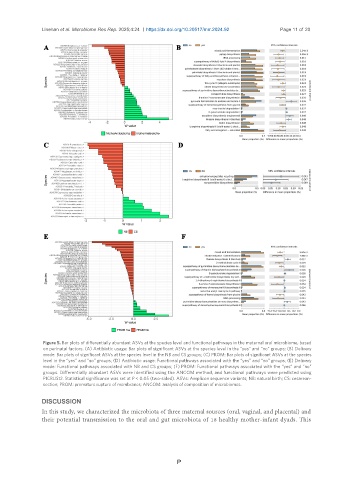
                Figure 5. Bar plots of differentially abundant ASVs at the species level and functional pathways in the maternal oral microbiome, based
                on perinatal factors. (A) Antibiotic usage: Bar plots of significant ASVs at the species level in the “yes” and “no” groups; (B) Delivery
                mode: Bar plots of significant ASVs at the species level in the NB and CS groups; (C) PROM: Bar plots of significant ASVs at the species
                level in the “yes” and “no” groups; (D) Antibiotic usage: Functional pathways associated with the “yes” and “no” groups; (E) Delivery
                mode: Functional pathways associated with NB and CS groups; (F) PROM: Functional pathways associated with the “yes” and “no”
                groups. Differentially abundant ASVs were identified using the ANCOM method, and functional pathways were predicted using
                PICRUSt2. Statistical significance was set at P < 0.05 (two-sided). ASVs: Amplicon sequence variants; NB: natural birth; CS: cesarean-
                section; PROM: premature rupture of membranes; ANCOM: analysis of composition of microbiomes.


               DISCUSSION
               In this study, we characterized the microbiota of three maternal sources (oral, vaginal, and placental) and
               their potential transmission to the oral and gut microbiota of 18 healthy mother-infant dyads. This

