


Page 146 - Read Online
P. 146
Page 12 of 20               Linehan et al. Microbiome Res Rep. 2025;4:24  https://dx.doi.org/10.20517/mrr.2024.92


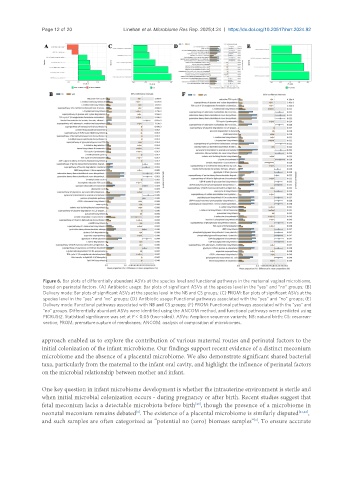
                Figure 6. Bar plots of differentially abundant ASVs at the species level and functional pathways in the maternal vaginal microbiome,
                based on perinatal factors. (A) Antibiotic usage: Bar plots of significant ASVs at the species level in the “yes” and “no” groups; (B)
                Delivery mode: Bar plots of significant ASVs at the species level in the NB and CS groups; (C) PROM: Bar plots of significant ASVs at the
                species level in the “yes” and “no” groups; (D) Antibiotic usage: Functional pathways associated with the “yes” and “no” groups; (E)
                Delivery mode: Functional pathways associated with NB and CS groups; (F) PROM: Functional pathways associated with the “yes” and
                “no” groups. Differentially abundant ASVs were identified using the ANCOM method, and functional pathways were predicted using
                PICRUSt2. Statistical significance was set at P < 0.05 (two-sided). ASVs: Amplicon sequence variants; NB: natural birth; CS: cesarean-
                section; PROM: premature rupture of membranes; ANCOM: analysis of composition of microbiomes.

               approach enabled us to explore the contribution of various maternal routes and perinatal factors to the
               initial colonization of the infant microbiome. Our findings support recent evidence of a distinct meconium
               microbiome and the absence of a placental microbiome. We also demonstrate significant shared bacterial
               taxa, particularly from the maternal to the infant oral cavity, and highlight the influence of perinatal factors
               on the microbial relationship between mother and infant.

               One key question in infant microbiome development is whether the intrauterine environment is sterile and
               when initial microbial colonization occurs - during pregnancy or after birth. Recent studies suggest that
               fetal meconium lacks a detectable microbiota before birth , though the presence of a microbiome in
                                                                   [40]
                                               [6]
               neonatal meconium remains debated . The existence of a placental microbiome is similarly disputed [41,42] ,
               and such samples are often categorized as “potential no (zero) biomass samples” . To ensure accurate
                                                                                       [6]

