


Page 68 - Read Online
P. 68
Martin et al. Microbiome Res Rep 2023;2:17  https://dx.doi.org/10.20517/mrr.2023.10  Page 5 of 13


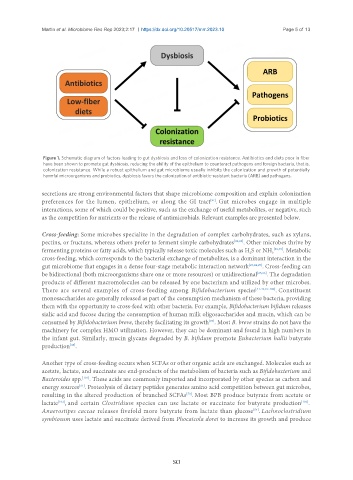
                Figure 1. Schematic diagram of factors leading to gut dysbiosis and loss of colonization resistance. Antibiotics and diets poor in fiber
                have been shown to promote gut dysbiosis, reducing the ability of the epithelium to counteract pathogens and foreign bacteria, that is,
                colonization resistance. While a robust epithelium and gut microbiome usually inhibits the colonization and growth of potentially
                harmful microorganisms and probiotics, dysbiosis favors the colonization of antibiotic-resistant bacteria (ARB) and pathogens.

               secretions are strong environmental factors that shape microbiome composition and explain colonization
               preferences for the lumen, epithelium, or along the GI tract . Gut microbes engage in multiple
                                                                        [91]
               interactions, some of which could be positive, such as the exchange of useful metabolites, or negative, such
               as the competition for nutrients or the release of antimicrobials. Relevant examples are presented below.

               Cross-feeding: Some microbes specialize in the degradation of complex carbohydrates, such as xylans,
               pectins, or fructans, whereas others prefer to ferment simple carbohydrates [92,93] . Other microbes thrive by
               fermenting proteins or fatty acids, which typically release toxic molecules such as H S or NH 3 [30,73] . Metabolic
                                                                                     2
               cross-feeding, which corresponds to the bacterial exchange of metabolites, is a dominant interaction in the
               gut microbiome that engages in a dense four-stage metabolic interaction network [25,94,95] . Cross-feeding can
               be bidirectional (both microorganisms share one or more resources) or unidirectional [25,96] . The degradation
               products of different macromolecules can be released by one bacterium and utilized by other microbes.
               There  are  several  examples  of  cross-feeding  among  Bifidobacterium  species [41-45,97-100] . Constituent
               monosaccharides are generally released as part of the consumption mechanism of these bacteria, providing
               them with the opportunity to cross-feed with other bacteria. For example, Bifidobacterium bifidum releases
               sialic acid and fucose during the consumption of human milk oligosaccharides and mucin, which can be
               consumed by Bifidobacterium breve, thereby facilitating its growth . Most B. breve strains do not have the
                                                                       [99]
               machinery for complex HMO utilization. However, they can be dominant and found in high numbers in
               the infant gut. Similarly, mucin glycans degraded by B. bifidum promote Eubacterium hallii butyrate
               production .
                         [45]

               Another type of cross-feeding occurs when SCFAs or other organic acids are exchanged. Molecules such as
               acetate, lactate, and succinate are end-products of the metabolism of bacteria such as Bifidobacterium and
                             [101]
               Bacteroides spp. . These acids are commonly imported and incorporated by other species as carbon and
                            [31]
               energy sources . Proteolysis of dietary peptides generates amino acid competition between gut microbes,
               resulting in the altered production of branched SCFAs . Most BPB produce butyrate from acetate or
                                                                [73]
                     [102]
               lactate , and certain Clostridium species can use lactate or succinate for butyrate production .
                                                                                                       [102]
               Anaerostipes caccae releases fivefold more butyrate from lactate than glucose . Lachnoclostridium
                                                                                      [54]
               symbiosum uses lactate and succinate derived from Phocaicola dorei to increase its growth and produce

