Page 50 - Read Online
P. 50
Page 4 of 13 Pennestrì et al. Mini-invasive Surg. 2025;9:16 https://dx.doi.org/10.20517/2574-1225.2025.03
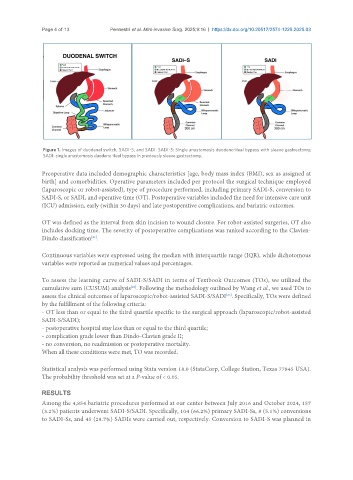
Figure 1. Images of duodenal switch, SADI-S, and SADI. SADI-S: Single anastomosis duodeno-ileal bypass with sleeve gastrectomy;
SADI: single anastomosis duodeno-ileal bypass in previously sleeve gastrectomy.
Preoperative data included demographic characteristics [age, body mass index (BMI), sex as assigned at
birth] and comorbidities. Operative parameters included per protocol the surgical technique employed
(laparoscopic or robot-assisted), type of procedure performed, including primary SADI-S, conversion to
SADI-S, or SADI, and operative time (OT). Postoperative variables included the need for intensive care unit
(ICU) admission, early (within 30 days) and late postoperative complications, and bariatric outcomes.
OT was defined as the interval from skin incision to wound closure. For robot-assisted surgeries, OT also
includes docking time. The severity of postoperative complications was ranked according to the Clavien-
[21]
Dindo classification .
Continuous variables were expressed using the median with interquartile range (IQR), while dichotomous
variables were reported as numerical values and percentages.
To assess the learning curve of SADI-S/SADI in terms of Textbook Outcomes (TOs), we utilized the
cumulative sum (CUSUM) analysis . Following the methodology outlined by Wang et al., we used TOs to
[22]
assess the clinical outcomes of laparoscopic/robot-assisted SADI-S/SADI . Specifically, TOs were defined
[23]
by the fulfillment of the following criteria:
- OT less than or equal to the third quartile specific to the surgical approach (laparoscopic/robot-assisted
SADI-S/SADI);
- postoperative hospital stay less than or equal to the third quartile;
- complication grade lower than Dindo–Clavien grade II;
- no conversion, no readmission or postoperative mortality.
When all these conditions were met, TO was recorded.
Statistical analysis was performed using Stata version 18.0 (StataCorp, College Station, Texas 77845 USA).
The probability threshold was set at a P-value of < 0.05.
RESULTS
Among the 4,854 bariatric procedures performed at our center between July 2016 and October 2024, 157
(3.2%) patients underwent SADI-S/SADI. Specifically, 104 (66.2%) primary SADI-Ss, 8 (5.1%) conversions
to SADI-Ss, and 45 (28.7%) SADIs were carried out, respectively. Conversion to SADI-S was planned in