Page 41 - Read Online
P. 41

Nwaiwu et al. Mini-invasive Surg. 2025;9:20  https://dx.doi.org/10.20517/2574-1225.2024.112  Page 15 of 20


                                                                       [37]                          [71]
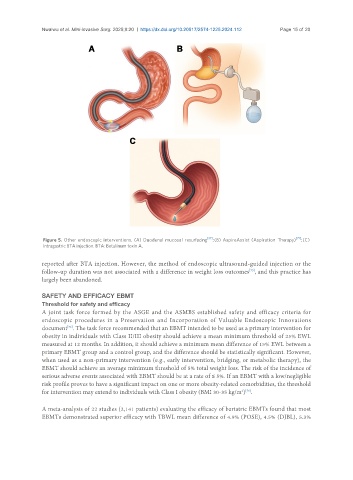
                Figure 5. Other endoscopic interventions. (A) Duodenal mucosal  resurfacing  ; (B) AspireAssist (Aspiration  Therapy)  ; (C)
                Intragastric BTA injection. BTA: Botulinum toxin A.

               reported after BTA injection. However, the method of endoscopic ultrasound-guided injection or the
                                                                                     [75]
               follow-up duration was not associated with a difference in weight loss outcomes , and this practice has
               largely been abandoned.


               SAFETY AND EFFICACY EBMT
               Threshold for safety and efficacy
               A joint task force formed by the ASGE and the ASMBS established safety and efficacy criteria for
               endoscopic procedures in a Preservation and Incorporation of Valuable Endoscopic Innovations
                        [76]
               document . The task force recommended that an EBMT intended to be used as a primary intervention for
               obesity in individuals with Class II/III obesity should achieve a mean minimum threshold of 25% EWL
               measured at 12 months. In addition, it should achieve a minimum mean difference of 15% EWL between a
               primary EBMT group and a control group, and the difference should be statistically significant. However,
               when used as a non-primary intervention (e.g., early intervention, bridging, or metabolic therapy), the
               EBMT should achieve an average minimum threshold of 5% total weight loss. The risk of the incidence of
               serious adverse events associated with EBMT should be at a rate of ≤ 5%. If an EBMT with a low/negligible
               risk profile proves to have a significant impact on one or more obesity-related comorbidities, the threshold
               for intervention may extend to individuals with Class I obesity (BMI 30-35 kg/m ) .
                                                                                  2 [76]
               A meta-analysis of 22 studies (2,141 patients) evaluating the efficacy of bariatric EBMTs found that most
               EBMTs demonstrated superior efficacy with TBWL mean difference of 4.9% (POSE), 4.5% (DJBL), 5.3%
   36   37   38   39   40   41   42   43   44   45   46