Page 31 - Read Online
P. 31
Nwaiwu et al. Mini-invasive Surg. 2025;9:20 https://dx.doi.org/10.20517/2574-1225.2024.112 Page 5 of 20
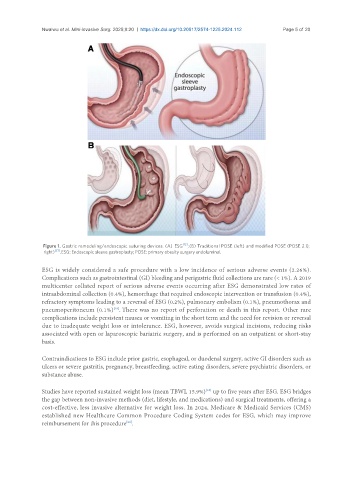
Figure 1. Gastric remodeling/endoscopic suturing devices. (A) ESG [12] ; (B) Traditional POSE (left) and modified POSE (POSE 2.0;
right) [21] . ESG: Endoscopic sleeve gastroplasty; POSE: primary obesity surgery endoluminal.
ESG is widely considered a safe procedure with a low incidence of serious adverse events (2.26%).
Complications such as gastrointestinal (GI) bleeding and perigastric fluid collections are rare (< 1%). A 2019
multicenter collated report of serious adverse events occurring after ESG demonstrated low rates of
intraabdominal collection (0.4%), hemorrhage that required endoscopic intervention or transfusion (0.4%),
refractory symptoms leading to a reversal of ESG (0.2%), pulmonary embolism (0.1%), pneumothorax and
[19]
pneumoperitoneum (0.1%) . There was no report of perforation or death in this report. Other rare
complications include persistent nausea or vomiting in the short term and the need for revision or reversal
due to inadequate weight loss or intolerance. ESG, however, avoids surgical incisions, reducing risks
associated with open or laparoscopic bariatric surgery, and is performed on an outpatient or short-stay
basis.
Contraindications to ESG include prior gastric, esophageal, or duodenal surgery, active GI disorders such as
ulcers or severe gastritis, pregnancy, breastfeeding, active eating disorders, severe psychiatric disorders, or
substance abuse.
Studies have reported sustained weight loss (mean TBWL 15.9%) up to five years after ESG. ESG bridges
[18]
the gap between non-invasive methods (diet, lifestyle, and medications) and surgical treatments, offering a
cost-effective, less invasive alternative for weight loss. In 2024, Medicare & Medicaid Services (CMS)
established new Healthcare Common Procedure Coding System codes for ESG, which may improve
reimbursement for this procedure .
[20]