Page 28 - Read Online
P. 28

Nwaiwu et al. Mini-invasive Surg. 2025;9:20  https://dx.doi.org/10.20517/2574-1225.2024.112  Page 3 of 20


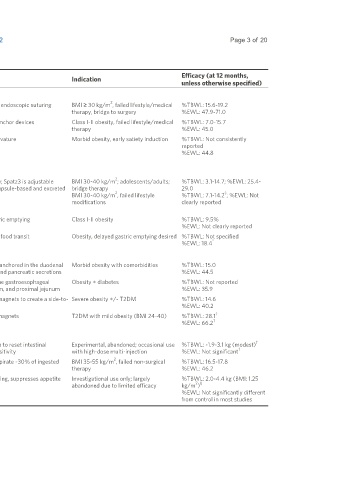
 Table 1. Overview of EBMT by category: mechanisms, indications, and efficacy

                                                              Efficacy (at 12 months,
 EBMT  Mechanism         Indication
                                                              unless otherwise specified)
 Gastric remodeling/endoscopic suturing devices
                                      2
 ESG  Gastric volume reduction via full-thickness endoscopic suturing  BMI ≥ 30 kg/m , failed lifestyle/medical   %TBWL: 15.6-19.2
                         therapy, bridge to surgery           %EWL: 47.9-71.0
 POSE  Endoscopic gastric plication using suture-anchor devices  Class I-II obesity, failed lifestyle/medical   %TBWL: 7.0-15.7
                         therapy                              %EWL: 45.0
 TOGA  Stapled pouch creation along the lesser curvature  Morbid obesity, early satiety induction  %TBWL: Not consistently
                                                              reported
                                                              %EWL: 44.8
 Space-occupying devices
 IGBs
                                        2
 • Fluid-filled IGBs: Orbera balloon system, Orbera 365 balloon,  Saline-filled balloons placed endoscopically; Spatz3 is adjustable   BMI 30-40 kg/m ; adolescents/adults;   %TBWL: 3.1-14.7; %EWL: 25.4-
 ReShape balloon system, the Spatz3 adjustable balloon   Gas-filled or air-filled balloons; some are capsule-based and excreted  bridge therapy   29.0
                                        2                                    ‡
 system   naturally      BMI 30-40 kg/m , failed lifestyle    %TBWL: 7.1-14.2 ; %EWL: Not
 • Gas-filled balloons: Obalon balloon system, the   modifications  clearly reported
 TM
 Heliosphere® BAG, the Elipse  balloon
 TPS  Intragastric-duodenal device delaying gastric emptying  Class I-II obesity  %TBWL: 9.5%
                                                              %EWL: Not clearly reported
 SatiSphere  Self-expanding duodenal device that slows food transit  Obesity, delayed gastric emptying desired %TBWL: Not specified
                                                                         *
                                                              %EWL: 18.4
 Absorption limiting interventions
 DJBL  60-cm impermeable fluoropolymer sleeve anchored in the duodenal   Morbid obesity with comorbidities  %TBWL: 15.0
 bulb to prevent mixing of chyme with bile and pancreatic secretions  %EWL: 44.5
 GJBS  120-cm impermeable sleeve anchored at the gastroesophageal   Obesity + diabetes  %TBWL: Not reported
 junction, bypassing the stomach, duodenum, and proximal jejunum  %EWL: 35.9
 IMAS  Endoscopic placement of self-assembling magnets to create a side-to- Severe obesity +/- T2DM  %TBWL: 14.6
 side jejunoileal bypass without incisions                    %EWL: 40.2
                                                                          †
 MS  Duodenoileostomy using self-assembling magnets  T2DM with mild obesity (BMI 24-40)  %TBWL: 28.1
                                                                         †
                                                              %EWL: 66.2
 Others
                                                                                       †
 DMR  Hydrothermal ablation of duodenal mucosa to reset intestinal   Experimental, abandoned; occasional use  %TBWL: ~1.9-3.1 kg (modest)
                                                                                 †
 hormone signaling and improve insulin sensitivity  with high-dose multi-injection  %EWL: Not significant
                                       2
 Aspiration therapy  Percutaneous gastrostomy tube used to aspirate ~30% of ingested   BMI 35-55 kg/m , failed non-surgical   %TBWL: 16.5-17.8
 food                    therapy                              %EWL: 46.2
 Intragastric BTA injection  Inhibits acetylcholine, delays gastric emptying, suppresses appetite  Investigational use only; largely   %TBWL: 2.0-4.4 kg (BMI: 1.25
                                                                   2 §
                         abandoned due to limited efficacy    kg/m )
                                                              %EWL: Not significantly different
                                                              from control in most studies
   23   24   25   26   27   28   29   30   31   32   33