


Page 62 - Read Online
P. 62
Shad. J Transl Genet Genom 2023;7:141-65  https://dx.doi.org/10.20517/jtgg.2023.11   Page 151


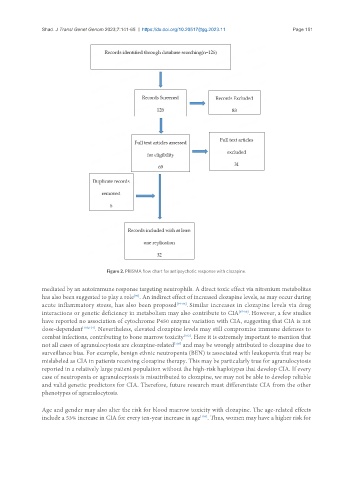
                                     Figure 2. PRISMA flow chart for antipsychotic response with clozapine.

               mediated by an autoimmune response targeting neutrophils. A direct toxic effect via nitrenium metabolites
                                              [90]
               has also been suggested to play a role . An indirect effect of increased clozapine levels, as may occur during
               acute inflammatory stress, has also been proposed [94-96] . Similar increases in clozapine levels via drug
               interactions or genetic deficiency in metabolism may also contribute to CIA [97-99] . However, a few studies
               have reported no association of cytochrome P450 enzyme variation with CIA, suggesting that CIA is not
               dose-dependent [100,101] . Nevertheless, elevated clozapine levels may still compromise immune defenses to
               combat infections, contributing to bone marrow toxicity . Here it is extremely important to mention that
                                                               [102]
               not all cases of agranulocytosis are clozapine-related  and may be wrongly attributed to clozapine due to
                                                            [103]
               surveillance bias. For example, benign ethnic neutropenia (BEN) is associated with leukopenia that may be
               mislabeled as CIA in patients receiving clozapine therapy. This may be particularly true for agranulocytosis
               reported in a relatively large patient population without the high-risk haplotypes that develop CIA. If every
               case of neutropenia or agranulocytosis is misattributed to clozapine, we may not be able to develop reliable
               and valid genetic predictors for CIA. Therefore, future research must differentiate CIA from the other
               phenotypes of agranulocytosis.

               Age and gender may also alter the risk for blood marrow toxicity with clozapine. The age-related effects
                                                                     [104]
               include a 53% increase in CIA for every ten-year increase in age . Thus, women may have a higher risk for

