


Page 31 - Read Online
P. 31
Page 262       Lyulcheva-Bennett et al. J Transl Genet Genom 2023;7:259-73  https://dx.doi.org/10.20517/jtgg.2023.33


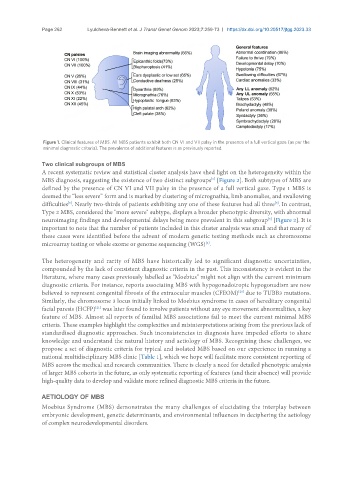
                Figure 1. Clinical features of MBS. All MBS patients exhibit both CN VI and VII palsy in the presence of a full vertical gaze (as per the
                minimal diagnostic criteria). The prevalence of additional features is as previously reported.

               Two clinical subgroups of MBS
               A recent systematic review and statistical cluster analysis have shed light on the heterogeneity within the
                                                                        [5]
               MBS diagnosis, suggesting the existence of two distinct subgroups  [Figure 2]. Both subtypes of MBS are
               defined by the presence of CN VI and VII palsy in the presence of a full vertical gaze. Type 1 MBS is
               deemed the “less severe” form and is marked by clustering of micrognathia, limb anomalies, and swallowing
               difficulties . Nearly two-thirds of patients exhibiting any one of these features had all three . In contrast,
                                                                                              [5]
                        [5]
               Type 2 MBS, considered the "more severe" subtype, displays a broader phenotypic diversity, with abnormal
               neuroimaging findings and developmental delays being more prevalent in this subgroup  [Figure 2]. It is
                                                                                           [5]
               important to note that the number of patients included in this cluster analysis was small and that many of
               these cases were identified before the advent of modern genetic testing methods such as chromosome
               microarray testing or whole exome or genome sequencing (WGS) .
                                                                      [5]

               The heterogeneity and rarity of MBS have historically led to significant diagnostic uncertainties,
               compounded by the lack of consistent diagnostic criteria in the past. This inconsistency is evident in the
               literature, where many cases previously labelled as "Moebius" might not align with the current minimum
               diagnostic criteria. For instance, reports associating MBS with hypogonadotropic hypogonadism are now
               believed to represent congenital fibrosis of the extraocular muscles (CFEOM)  due to TUBB3 mutations.
                                                                                 [20]
               Similarly, the chromosome 3 locus initially linked to Moebius syndrome in cases of hereditary congenital
               facial paresis (HCFP)  was later found to involve patients without any eye movement abnormalities, a key
                                 [21]
               feature of MBS. Almost all reports of familial MBS associations fail to meet the current minimal MBS
               criteria. These examples highlight the complexities and misinterpretations arising from the previous lack of
               standardised diagnostic approaches. Such inconsistencies in diagnosis have impeded efforts to share
               knowledge and understand the natural history and aetiology of MBS. Recognising these challenges, we
               propose a set of diagnostic criteria for typical and isolated MBS based on our experience in running a
               national multidisciplinary MBS clinic [Table 1], which we hope will facilitate more consistent reporting of
               MBS across the medical and research communities. There is clearly a need for detailed phenotypic analysis
               of larger MBS cohorts in the future, as only systematic reporting of features (and their absence) will provide
               high-quality data to develop and validate more refined diagnostic MBS criteria in the future.


               AETIOLOGY OF MBS
               Moebius Syndrome (MBS) demonstrates the many challenges of elucidating the interplay between
               embryonic development, genetic determinants, and environmental influences in deciphering the aetiology
               of complex neurodevelopmental disorders.

