


Page 12 - Read Online
P. 12
Page 91               Comertpay et al. J Transl Genet Genom 2022;6:84-94  https://dx.doi.org/10.20517/jtgg.2021.44


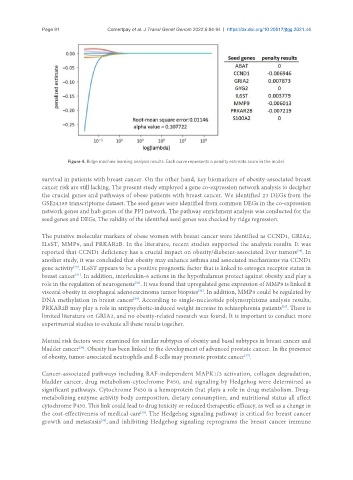
                        Figure 4. Ridge machine learning analysis results. Each curve represents a penalty estimate score in the model.

               survival in patients with breast cancer. On the other hand, key biomarkers of obesity-associated breast
               cancer risk are still lacking. The present study employed a gene co-expression network analysis to decipher
               the crucial genes and pathways of obese patients with breast cancer. We identified 23 DEGs from the
               GSE24185 transcriptome dataset. The seed genes were identified from common DEGs in the co-expression
               network genes and hub genes of the PPI network. The pathway enrichment analysis was conducted for the
               seed genes and DEGs. The validity of the identified seed genes was checked by ridge regression.


               The putative molecular markers of obese women with breast cancer were identified as CCND1, GRIA2,
               IL6ST, MMP9, and PRKAR2B. In the literature, recent studies supported the analysis results. It was
                                                                                                     [29]
               reported that CCND1 deficiency has a crucial impact on obesity/diabetes-associated liver tumors . In
               another study, it was concluded that obesity may enhance asthma and associated mechanisms via CCND1
                          [30]
               gene activity . IL6ST appears to be a positive prognostic factor that is linked to estrogen receptor status in
                          [31]
               breast cancer . In addition, interleukin-6 actions in the hypothalamus protect against obesity and play a
               role in the regulation of neurogenesis . It was found that upregulated gene expression of MMP9 is linked it
                                              [32]
                                                                    [33]
               visceral obesity in esophageal adenocarcinoma tumor biopsies . In addition, MMP9 could be regulated by
               DNA methylation in breast cancer . According to single-nucleotide polymorphisms analysis results,
                                              [34]
                                                                                                [35]
               PRKAR2B may play a role in antipsychotic-induced weight increase in schizophrenia patients . There is
               limited literature on GRIA2, and no obesity-related research was found. It is important to conduct more
               experimental studies to evaluate all these results together.
               Mutual risk factors were examined for similar subtypes of obesity and basal subtypes in breast cancer and
                            [36]
               bladder cancer . Obesity has been linked to the development of advanced prostate cancer. In the presence
                                                                                   [37]
               of obesity, tumor-associated neutrophils and B cells may promote prostate cancer .
               Cancer-associated pathways including RAF-independent MAPK1/3 activation, collagen degradation,
               bladder cancer, drug metabolism-cytochrome P450, and signaling by Hedgehog were determined as
               significant pathways. Cytochrome P450 is a hemoprotein that plays a role in drug metabolism. Drug-
               metabolizing enzyme activity body composition, dietary consumption, and nutritional status all affect
               cytochrome P450. This link could lead to drug toxicity or reduced therapeutic efficacy, as well as a change in
               the cost-effectiveness of medical care . The Hedgehog signaling pathway is critical for breast cancer
                                                [38]
               growth and metastasis , and inhibiting Hedgehog signaling reprograms the breast cancer immune
                                   [39]

