


Page 28 - Read Online
P. 28
Page 343                    Gonzalez Castillo et al. J Transl Genet Genom. 2025;9:338-51  https://dx.doi.org/10.20517/jtgg.2025.57

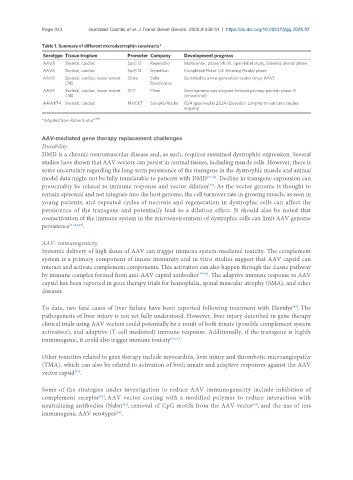
               Table 1. Summary of different microdystrophin constructs*
                Serotype Tissue tropism     Promoter Company   Development progress
                AAV8   Skeletal, cardiac    Spc5.12  Regenxbio  Multicenter, phase I/II/III, open-label study. Entering pivotal phase
                AAV8   Skeletal, cardiac    Spc5.12  Genethon  Completed Phase 1/2. Entering Pivotal phase
                AAV9   Skeletal, cardiac, lesser extent   CK8e  Solid   Switched to a new generation vector (myo-AAV)
                       CNS                          Biosciences
                AAV9   Skeletal, cardiac, lesser extent   CK7  Pfizer  Development was stopped (missed primary point in phase III
                       CNS                                     clinical trial)
                AAVrh74 Skeletal, cardiac   MHCK7   Sarepta/Roche  FDA approved in 2024 (Elevydis). Long-term outcome studies
                                                               ongoing

                                 [36]
               *Adapted from Roberts et al.  .

               AAV-mediated gene therapy replacement challenges
               Durability
               DMD is a chronic neuromuscular disease and, as such, requires sustained dystrophin expression. Several
               studies have shown that AAV vectors can persist in normal tissues, including muscle cells. However, there is
               some uncertainty regarding the long-term persistence of the transgene in the dystrophic muscle and animal
               model data might not be fully translatable to patients with DMD [41,42] . Decline in transgene expression can
               presumably be related to immune response and vector dilution . As the vector genome is thought to
                                                                       [43]
               remain episomal and not integrate into the host genome, the cell turnover rate in growing muscle, as seen in
               young patients, and repeated cycles of necrosis and regeneration in dystrophic cells can affect the
               persistence of the transgene and potentially lead to a dilution effect. It should also be noted that
               overactivation of the immune system in the microenvironment of dystrophic cells can limit AAV genome
               persistence [41,44,45] .

               AAV- immunogenicity
               Systemic delivery of high doses of AAV can trigger immune system-mediated toxicity. The complement
               system is a primary component of innate immunity and in vitro studies suggest that AAV capsid can
               interact and activate complement components. This activation can also happen through the classic pathway
               by immune complex formed from anti-AAV capsid antibodies [45-48] . The adaptive immune response to AAV
               capsid has been reported in gene therapy trials for hemophilia, spinal muscular atrophy (SMA), and other
               diseases.


                                                                                                    [49]
               To date, two fatal cases of liver failure have been reported following treatment with Elevidys . The
               pathogenesis of liver injury is not yet fully understood. However, liver injury described in gene therapy
               clinical trials using AAV vectors could potentially be a result of both innate (possible complement system
               activation), and adaptive (T-cell mediated) immune response. Additionally, if the transgene is highly
               immunogenic, it could also trigger immune toxicity [50,51] .

               Other toxicities related to gene therapy include myocarditis, liver injury and thrombotic microangiopathy
               (TMA), which can also be related to activation of both innate and adaptive responses against the AAV
                          [51]
               vector capsid .
               Some of the strategies under investigation to reduce AAV immunogenicity include inhibition of
               complement receptor , AAV vector coating with a modified polymer to reduce interaction with
                                  [52]
               neutralizing antibodies (Nabs) , removal of CpG motifs from the AAV vector , and the use of less
                                                                                      [54]
                                          [53]
               immunogenic AAV serotypes .
                                        [55]

