


Page 26 - Read Online
P. 26
Page 341                    Gonzalez Castillo et al. J Transl Genet Genom. 2025;9:338-51  https://dx.doi.org/10.20517/jtgg.2025.57


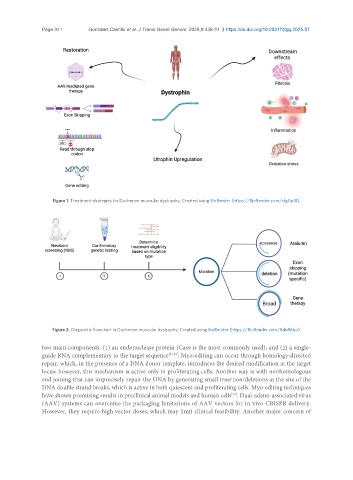
                   Figure 1. Treatment strategies for Duchenne muscular dystrophy. Created using BioRender (https://BioRender.com/sfg0p18).


                   Figure 2. Diagnostic flowchart in Duchenne muscular dystrophy. Created using BioRender (https://BioRender.com/8du86bo).

               two main components: (1) an endonuclease protein (Cas9 is the most commonly used); and (2) a single-
               guide RNA complementary to the target sequence [31,32] . Myo-editing can occur through homology-directed
               repair, which, in the presence of a DNA donor template, introduces the desired modification at the target
               locus; however, this mechanism is active only in proliferating cells. Another way is with nonhomologous
               end joining that can imprecisely repair the DNA by generating small insertion/deletions at the site of the
               DNA double strand breaks, which is active in both quiescent and proliferating cells. Myo-editing techniques
                                                                               [33]
               have shown promising results in preclinical animal models and human cells . Dual-adeno-associated virus
               (AAV) systems can overcome the packaging limitations of AAV vectors for in vivo CRISPR delivery.
               However, they require high vector doses, which may limit clinical feasibility. Another major concern of

