


Page 39 - Read Online
P. 39
Page 12 of 16                           Lu et al. J Mater Inf 2024;4:31  https://dx.doi.org/10.20517/jmi.2024.65


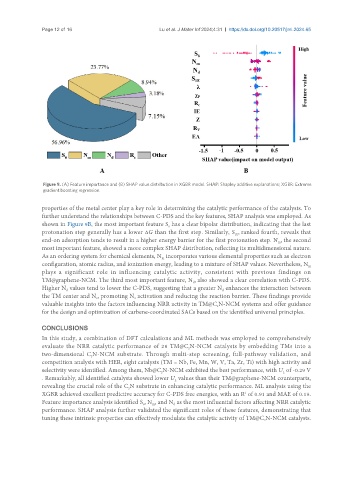
                Figure 9. (A) Feature importance and (B) SHAP value distribution in XGBR model. SHAP: Shapley additive explanations; XGBR: Extreme
                gradient boosting regression.

               properties of the metal center play a key role in determining the catalytic performance of the catalysts. To
               further understand the relationships between C-PDS and the key features, SHAP analysis was employed. As
               shown in Figure 9B, the most important feature S  has a clear bipolar distribution, indicating that the last
                                                          6
               protonation step generally has a lower ΔG than the first step. Similarly, S , ranked fourth, reveals that
                                                                                1E
               end-on adsorption tends to result in a higher energy barrier for the first protonation step. N , the second
                                                                                               m
               most important feature, showed a more complex SHAP distribution, reflecting its multidimensional nature.
               As an ordering system for chemical elements, N  incorporates various elemental properties such as electron
                                                        m
               configuration, atomic radius, and ionization energy, leading to a mixture of SHAP values. Nevertheless, N
                                                                                                         m
               plays  a  significant  role  in  influencing  catalytic  activity,  consistent  with  previous  findings  on
               TM@graphene-NCM. The third most important feature, N , also showed a clear correlation with C-PDS.
                                                                  d
               Higher N  values tend to lower the C-PDS, suggesting that a greater N  enhances the interaction between
                       d
                                                                            d
               the TM center and N , promoting N  activation and reducing the reaction barrier. These findings provide
                                              2
                                 2
               valuable insights into the factors influencing NRR activity in TM@C N-NCM systems and offer guidance
                                                                          2
               for the design and optimization of carbene-coordinated SACs based on the identified universal principles.
               CONCLUSIONS
               In this study, a combination of DFT calculations and ML methods was employed to comprehensively
               evaluate the NRR catalytic performance of 28 TM@C N-NCM catalysts by embedding TMs into a
                                                                2
               two-dimensional C N-NCM substrate. Through multi-step screening, full-pathway validation, and
                                2
               competition analysis with HER, eight catalysts (TM = Nb, Fe, Mn, W, V, Ta, Zr, Ti) with high activity and
               selectivity were identified. Among them, Nb@C N-NCM exhibited the best performance, with U  of -0.29 V
                                                                                                L
                                                       2
               . Remarkably, all identified catalysts showed lower U  values than their TM@graphene-NCM counterparts,
                                                            L
               revealing the crucial role of the C N substrate in enhancing catalytic performance. ML analysis using the
                                            2
                                                                                   2
               XGBR achieved excellent predictive accuracy for C-PDS free energies, with an R  of 0.91 and MAE of 0.19.
               Feature importance analysis identified S , N , and N  as the most influential factors affecting NRR catalytic
                                                 6
                                                           d
                                                    m
               performance. SHAP analysis further validated the significant roles of these features, demonstrating that
               tuning these intrinsic properties can effectively modulate the catalytic activity of TM@C N-NCM catalysts.
                                                                                          2

