


Page 73 - Read Online
P. 73
Page 18 of 21                      Wen et al. J. Mater. Inf. 2025, 5, 30  https://dx.doi.org/10.20517/jmi.2024.102


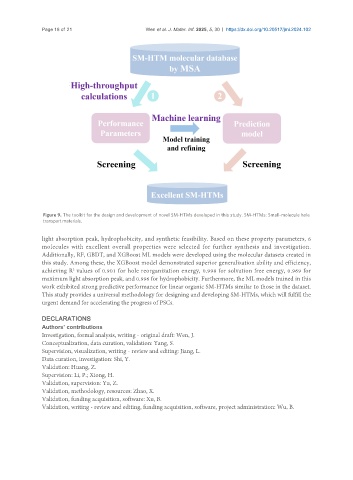
                Figure 9. The toolkit for the design and development of novel SM-HTMs developed in this study. SM-HTMs: Small-molecule hole
                transport materials.

               light absorption peak, hydrophobicity, and synthetic feasibility. Based on these property parameters, 6
               molecules with excellent overall properties were selected for further synthesis and investigation.
               Additionally, RF, GBDT, and XGBoost ML models were developed using the molecular datasets created in
               this study. Among these, the XGBoost model demonstrated superior generalization ability and efficiency,
                          2
               achieving R  values of 0.901 for hole reorganization energy, 0.998 for solvation free energy, 0.969 for
               maximum light absorption peak, and 0.996 for hydrophobicity. Furthermore, the ML models trained in this
               work exhibited strong predictive performance for linear organic SM-HTMs similar to those in the dataset.
               This study provides a universal methodology for designing and developing SM-HTMs, which will fulfill the
               urgent demand for accelerating the progress of PSCs.

               DECLARATIONS
               Authors’ contributions
               Investigation, formal analysis, writing - original draft: Wen, J.
               Conceptualization, data curation, validation: Yang, S.
               Supervision, visualization, writing - review and editing: Jiang, L.
               Data curation, investigation: Shi, Y.
               Validation: Huang, Z.
               Supervision: Li, P.; Xiong, H.
               Validation, supervision: Yu, Z.
               Validation, methodology, resources: Zhao, X.
               Validation, funding acquisition, software: Xu, B.
               Validation, writing - review and editing, funding acquisition, software, project administration: Wu, B.

