


Page 14 - Read Online
P. 14
Page 1686                                  Scattini et al. Extracell Vesicles Circ Nucleic Acids. 2026;7:1681-704


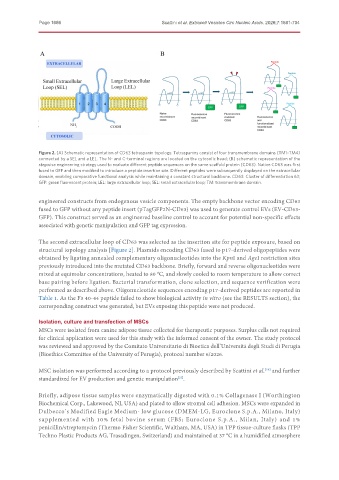
               Figure 2. (A) Schematic representation of CD63 tetraspanin topology. Tetraspanins consist of four transmembrane domains (TM1-TM4)
               connected by a SEL and a LEL. The N- and C-terminal regions are located on the cytosolic head; (B) schematic representation of the
               stepwise engineering strategy used to evaluate different peptide sequences on the same scaffold protein (CD63). Native CD63 was first
               fused to GFP and then modified to introduce a peptide insertion site. Different peptides were subsequently displayed on the extracellular
               domain, enabling comparative functional analysis while maintaining a constant structural backbone. CD63: Cluster of differentiation 63;
               GFP: green fluorescent protein; LEL: large extracellular loop; SEL: small extracellular loop; TM: transmembrane domain.


               engineered constructs from endogenous vesicle components. The empty backbone vector encoding CD63
               fused to GFP without any peptide insert (pTagGFP2N-CD63) was used to generate control EVs (EV-CD63-
               GFP). This construct served as an engineered baseline control to account for potential non-specific effects
               associated with genetic manipulation and GFP tag expression.


               The second extracellular loop of CD63 was selected as the insertion site for peptide exposure, based on
               structural topology analysis [Figure 2]. Plasmids encoding CD63 fused to p17-derived oligopeptides were
               obtained by ligating annealed complementary oligonucleotides into the KpnI and AgeI restriction sites
               previously introduced into the mutated CD63 backbone. Briefly, forward and reverse oligonucleotides were
               mixed at equimolar concentrations, heated to 80 °C, and slowly cooled to room temperature to allow correct
               base pairing before ligation. Bacterial transformation, clone selection, and sequence verification were
               performed as described above. Oligonucleotide sequences encoding p17-derived peptides are reported in
               Table 1. As the F3 40-44 peptide failed to show biological activity in vitro (see the RESULTS section), the
               corresponding construct was generated, but EVs exposing this peptide were not produced.


               Isolation, culture and transfection of MSCs
               MSCs were isolated from canine adipose tissue collected for therapeutic purposes. Surplus cells not required
               for clinical application were used for this study with the informed consent of the owner. The study protocol
               was reviewed and approved by the Comitato Universitario di Bioetica dell’Università degli Studi di Perugia
               (Bioethics Committee of the University of Perugia), protocol number 6/2026.


               MSC isolation was performed according to a protocol previously described by Scattini et al.  and further
                                                                                              [29]
               standardized for EV production and genetic manipulation .
                                                                [23]

               Briefly, adipose tissue samples were enzymatically digested with 0.1% Collagenase I (Worthington
               Biochemical Corp., Lakewood, NJ, USA) and plated to allow stromal cell adhesion. MSCs were expanded in
               Dulbecco’s Modified Eagle Medium- low glucose (DMEM-LG, Euroclone S.p.A., Milano, Italy)
               supplemented with 10% fetal bovine serum (FBS; Euroclone S.p.A., Milan, Italy) and 1%
               penicillin/streptomycin (Thermo Fisher Scientific, Waltham, MA, USA) in TPP tissue-culture flasks (TPP
               Techno Plastic Products AG, Trasadingen, Switzerland) and maintained at 37 °C in a humidified atmosphere

