


Page 12 - Read Online
P. 12
Page 1684 Scattini et al. Extracell Vesicles Circ Nucleic Acids. 2026;7:1681-704
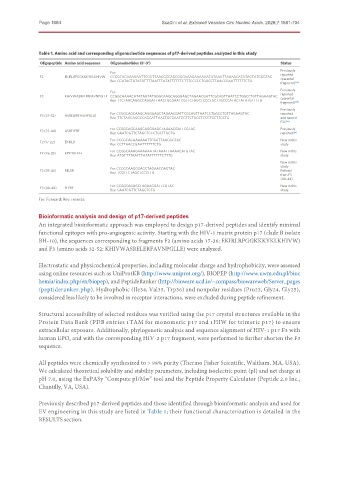
Table 1. Amino acid and corresponding oligonucleotide sequences of p17-derived peptides analyzed in this study
Oligopeptide Amino acid sequence Oligonucleotides (5’-3’) Status
Previously
For:
F2 EKIRLRPGGKKKYKLKHIVW CCGGCAGAAAAAATTCGGTTAAGGCCAGGGGGAAAGAAAAAATATAAATTAAAACATATAGTATGGGTAC reported
(parental
Rev: CCATACTATATGTTTTAATTTATATTTTTTCTTTCCCCCTGGCCTTAACCGAATTTTTTCTG
fragment) [26]
Previously
For:
F3 KHIVWASRELERFAVNPGLLE CCGGCAAAACATATAGTATGGGCAAGCAGGGAGCTAGAACGATTCGCAGTTAATCCTGGCCTGTTAGAAGTAC reported
(parental
Rev: TTCTAACAGGCCAGGATTAACTGCGAATCGTTCTAGCTCCCTGCTTGCCCATACTATATGTTTTG
fragment) [26]
Previously
For: CCGGCAGCAAGCAGGGAGCTAGAACGATTCGCAGTTAATCCTGGCCTGTTAGAAGTAC reported
F3 (37-52) ASRELERFAVNPGLLE
Rev: TTCTAACAGGCCAGGATTAACTGCGAATCGTTCTAGCTCCCTGCTTGCTG and named
F3S [26]
For: CCGGCAGCAAGCAGGGAGCTAGAACGATTCGTAC Previously
F3 (37-44) ASRELERF
Rev: GAATCGTTCTAGCTCCCTGCTTGCTG reported [26]
For: CCGGCAGAAAAAATTCGGTTAAGGGTAC New in this
F2 (17-22) EKIRLR
Rev: CCTTAACCGAATTTTTTCTG study
For: CCGGCAAAGAAAAAATATAAATTAAAACATGTAC New in this
F2 (26-33) KKKYKLKH
Rev: ATGTTTTAATTTATATTTTTTCTTTG study
New in this
study
For: CCGGCAAGGGAGCTAGAACGAGTAC
F3 (39-43) RELER Refined
Rev: TCGTTCTAGCTCCCTTG
from F3
(40-44)
For: CCGGCAGAGCTAGAACGATTCGTAC New in this
F3 (40-44) ELERF
Rev: GAATCGTTCTAGCTCTG study
For: Forward; Rev: reverse.
Bioinformatic analysis and design of p17-derived peptides
An integrated bioinformatic approach was employed to design p17-derived peptides and identify minimal
functional epitopes with pro-angiogenic activity. Starting with the HIV-1 matrix protein p17 (clade B isolate
BH-10), the sequences corresponding to fragments F2 (amino acids 17-36: EKIRLRPGGKKKYKLKHIVW)
and F3 (amino acids 32-52: KHIVWASRELERFAVNPGLLE) were analyzed.
Electrostatic and physicochemical properties, including molecular charge and hydrophobicity, were assessed
using online resources such as UniProtKB (http://www.uniprot.org/), BIOPEP (http://www.uwm.edu.pl/bioc
hemia/index.php/en/biopep), and PeptideRanker (http://bioware.ucd.ie/~compass/biowareweb/Server_pages
/peptideranker.php). Hydrophobic (Ile34, Val35, Trp36) and nonpolar residues (Pro23, Gly24, Gly25),
considered less likely to be involved in receptor interactions, were excluded during peptide refinement.
Structural accessibility of selected residues was verified using the p17 crystal structures available in the
Protein Data Bank (PDB entries 1TAM for monomeric p17 and 1HIW for trimeric p17) to ensure
extracellular exposure. Additionally, phylogenetic analysis and sequence alignment of HIV-1 p17 F3 with
human EPO, and with the corresponding HIV-2 p17 fragment, were performed to further shorten the F3
sequence.
All peptides were chemically synthesized to > 98% purity (Thermo Fisher Scientific, Waltham, MA, USA).
We calculated theoretical solubility and stability parameters, including isoelectric point (pI) and net charge at
pH 7.0, using the ExPASy “Compute pI/Mw” tool and the Peptide Property Calculator (Peptide 2.0 Inc.,
Chantilly, VA, USA).
Previously described p17-derived peptides and those identified through bioinformatic analysis and used for
EV engineering in this study are listed in Table 1; their functional characterization is detailed in the
RESULTS section.

