


Page 62 - Read Online
P. 62
Page 93                Rutter et al. Extracell Vesicles Circ Nucleic Acids 2023;4:90-106  https://dx.doi.org/10.20517/evcna.2023.04

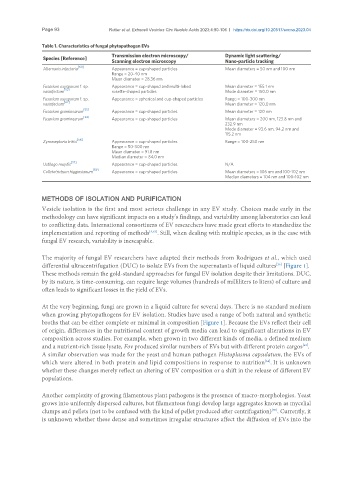
               Table 1. Characteristics of fungal phytopathogen EVs
                                       Transmission electron microscopy/     Dynamic light scattering/
                Species [Reference]
                                       Scanning electron microscopy          Nano-particle tracking
                           [60]
                Alternaria infectoria  Appearance = cup-shaped particles     Mean diameters = 50 nm and 100 nm
                                       Range = 20-40 nm
                                       Mean diameter = 28.36 nm
                Fusarium oxysporum f. sp.   Appearance = cup-shaped and multi-lobed   Mean diameter = 155.1 nm
                       [52]
                vasinfectum            rosette-shaped particles              Mode diameter = 150.0 nm
                Fusarium oxysporum f. sp.   Appearance = spherical and cup-shaped particles  Range = 100-300 nm
                       [62]
                vasinfectum                                                  Mean diameter = 120.0 nm
                             [55]
                Fusarium graminearum   Appearance = cup-shaped particles     Mean diameter = 120 nm
                Fusarium graminearum [24]  Appearance = cup-shaped particles  Mean diameters = 200 nm, 123.8 nm and
                                                                             232.9 nm
                                                                             Mode diameter = 93.6 nm, 94.2 nm and
                                                                             115.2 nm
                Zymoseptoria tritici [56]  Appearance = cup-shaped particles   Range = 100-250 nm
                                       Range = 50-300 nm
                                       Mean diameter = 91.8 nm
                                       Median diameter = 84.0 nm
                         [57]
                Ustilago maydis        Appearance = cup-shaped particles     N/A
                                [59]
                Colletotrichum higginsianum  Appearance = cup-shaped particles  Mean diameters = 106 nm and 100-102 nm
                                                                             Median diameters = 104 nm and 100-102 nm

               METHODS OF ISOLATION AND PURIFICATION
               Vesicle isolation is the first and most serious challenge in any EV study. Choices made early in the
               methodology can have significant impacts on a study’s findings, and variability among laboratories can lead
               to conflicting data. International consortiums of EV researchers have made great efforts to standardize the
               implementation and reporting of methods [4,63] . Still, when dealing with multiple species, as is the case with
               fungal EV research, variability is inescapable.

               The majority of fungal EV researchers have adapted their methods from Rodrigues et al., which used
                                                                                              [36]
               differential ultracentrifugation (DUC) to isolate EVs from the supernatants of liquid cultures  [Figure 1].
               These methods remain the gold-standard approaches for fungal EV isolation despite their limitations. DUC,
               by its nature, is time-consuming, can require large volumes (hundreds of milliliters to liters) of culture and
               often leads to significant losses in the yield of EVs.


               At the very beginning, fungi are grown in a liquid culture for several days. There is no standard medium
               when growing phytopathogens for EV isolation. Studies have used a range of both natural and synthetic
               broths that can be either complete or minimal in composition [Figure 1]. Because the EVs reflect their cell
               of origin, differences in the nutritional content of growth media can lead to significant alterations in EV
               composition across studies. For example, when grown in two different kinds of media, a defined medium
               and a nutrient-rich tissue lysate, Fov produced similar numbers of EVs but with different protein cargos .
                                                                                                       [62]
               A similar observation was made for the yeast and human pathogen Histoplasma capsulatum, the EVs of
               which were altered in both protein and lipid compositions in response to nutrition . It is unknown
                                                                                          [64]
               whether these changes merely reflect an altering of EV composition or a shift in the release of different EV
               populations.

               Another complexity of growing filamentous plant pathogens is the presence of macro-morphologies. Yeast
               grows into uniformly dispersed cultures, but filamentous fungi develop large aggregates known as mycelial
               clumps and pellets (not to be confused with the kind of pellet produced after centrifugation) . Currently, it
                                                                                             [65]
               is unknown whether these dense and sometimes irregular structures affect the diffusion of EVs into the

