


Page 184 - Read Online
P. 184
Asao et al. Extracell Vesicles Circ Nucleic Acids 2023;4:461-85  https://dx.doi.org/10.20517/evcna.2023.37  Page 3


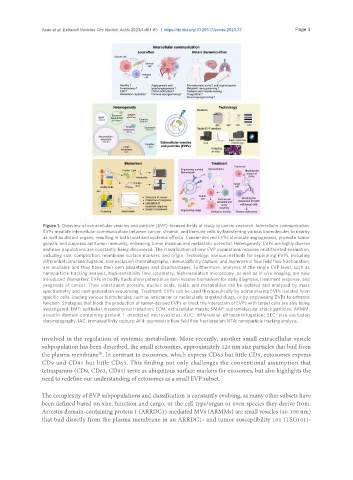
                Figure 1. Overview of extracellular vesicles and particle (EVP)-focused fields of study in cancer research. Intercellular communication:
                EVPs mediate intercellular communication between cancer, stromal, and immune cells by transferring various biomolecules to nearby
                as well as distant organs, resulting in both local and systemic effects. Cancer-derived EVPs stimulate angiogenesis, promote tumor
                growth, and suppress antitumor immunity, enhancing tumor invasion and metastatic potential. Heterogeneity: EVPs are highly diverse
                and new populations are constantly being discovered. The classification of new EVP populations requires multifaceted evaluation,
                including size, composition, membrane surface markers, and origin. Technology: various methods for separating EVPs, including
                differential ultracentrifugation, size exclusion chromatography, immunoaffinity capture, and asymmetric flow field flow fractionation,
                are available and they have their own advantages and disadvantages. Furthermore, analyses at the single EVP level, such as
                nanoparticle tracking analysis, high-sensitivity flow cytometry, high-resolution microscopy, as well as in vivo imaging, are now
                introduced. Biomarkers: EVPs in bodily fluids show potential as non-invasive biomarkers for early diagnosis, treatment response, and
                prognosis of cancer. Their constituent proteins, nucleic acids, lipids, and metabolites can be isolated and analyzed by mass
                spectrometry and next-generation sequencing. Treatment: EVPs can be used therapeutically by administering EVPs isolated from
                specific cells, loading various biomolecules such as anticancer or molecularly targeted drugs, or by engineering EVPs to enhance
                function. Strategies that block the production of tumor-derived EVPs or block the interaction of EVPs with target cells are also being
                investigated. EMT: epithelial-mesenchymal transition; ECM: extracellular matrix; SMAP: supramolecular attack particles; ARMM:
                arrestin  domain-containing  protein  1  -mediated  microvesicles;  dUC:  differential  ultracentrifugation;  SEC:  size  exclusion
                chromatography; IAC: immunoaffinity capture; AF4: asymmetric flow field flow fractionation; NTA: nanoparticle tracking analysis.

               involved in the regulation of systemic metabolism. More recently, another small extracellular vesicle
               subpopulation has been described, the small ectosomes, approximately 120 nm size particles that bud from
                                  [8]
               the plasma membrane . In contrast to exosomes, which express CD63 but little CD9, ectosomes express
               CD9 and CD81 but little CD63. This finding not only challenges the conventional assumption that
               tetraspanins (CD9, CD63, CD81) serve as ubiquitous surface markers for exosomes, but also highlights the
               need to redefine our understanding of ectosomes as a small EVP subset.

               The complexity of EVP subpopulations and classification is constantly evolving, as many other subsets have
               been defined based on size, function and cargo, or the cell type/organ or even species they derive from.
               Arrestin domain-containing protein 1 (ARRDC1)-mediated MVs (ARMMs) are small vesicles (40-100 nm)
               that bud directly from the plasma membrane in an ARRDC1- and tumor susceptibility 101 (TSG101)-

