


Page 147 - Read Online
P. 147
Cai et al. Extracell Vesicles Circ Nucleic Acids 2023;4:262-82  https://dx.doi.org/10.20517/evcna.2023.10  Page 13


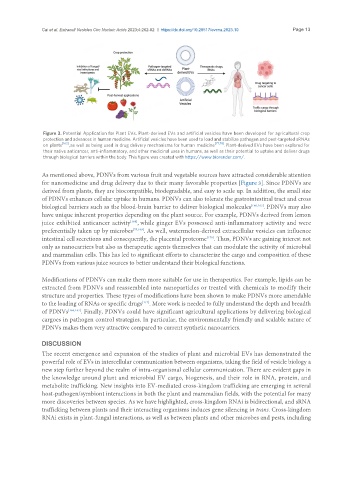
                Figure 3. Potential Application for Plant EVs. Plant-derived EVs and artificial vesicles have been developed for agricultural crop
                protection and advances in human medicine. Artificial vesicles have been used to load and stabilize pathogen and pest-targeted sRNAs
                on  plants [163] , as well as being used in drug delivery mechanisms for human  medicine [77,78] . Plant-derived EVs have been explored for
                their native anticancer, anti-inflammatory, and other medicinal uses in humans, as well as their potential to uptake and deliver drugs
                through biological barriers within the body. This figure was created with https://www.biorender.com/.

               As mentioned above, PDNVs from various fruit and vegetable sources have attracted considerable attention
               for nanomedicine and drug delivery due to their many favorable properties [Figure 3]. Since PDNVs are
               derived from plants, they are biocompatible, biodegradable, and easy to scale up. In addition, the small size
               of PDNVs enhances cellular uptake in humans. PDNVs can also tolerate the gastrointestinal tract and cross
               biological barriers such as the blood-brain barrier to deliver biological molecules [166,167] . PDNVs may also
               have unique inherent properties depending on the plant source. For example, PDNVs derived from lemon
               juice exhibited anticancer activity , while ginger EVs possessed anti-inflammatory activity and were
                                             [168]
               preferentially taken up by microbes [75,169] . As well, watermelon-derived extracellular vesicles can influence
               intestinal cell secretions and consequently, the placental proteome . Thus, PDNVs are gaining interest not
                                                                       [170]
               only as nanocarriers but also as therapeutic agents themselves that can modulate the activity of microbial
               and mammalian cells. This has led to significant efforts to characterize the cargo and composition of these
               PDNVs from various juice sources to better understand their biological functions.


               Modifications of PDNVs can make them more suitable for use in therapeutics. For example, lipids can be
               extracted from PDNVs and reassembled into nanoparticles or treated with chemicals to modify their
               structure and properties. These types of modifications have been shown to make PDNVs more amendable
               to the loading of RNAs or specific drugs . More work is needed to fully understand the depth and breadth
                                                 [171]
               of PDNVs [166,167] . Finally, PDNVs could have significant agricultural applications by delivering biological
               cargoes in pathogen control strategies. In particular, the environmentally friendly and scalable nature of
               PDNVs makes them very attractive compared to current synthetic nanocarriers.


               DISCUSSION
               The recent emergence and expansion of the studies of plant and microbial EVs has demonstrated the
               powerful role of EVs in intercellular communication between organisms, taking the field of vesicle biology a
               new step further beyond the realm of intra-organismal cellular communication. There are evident gaps in
               the knowledge around plant and microbial EV cargo, biogenesis, and their role in RNA, protein, and
               metabolite trafficking. New insights into EV-mediated cross-kingdom trafficking are emerging in several
               host-pathogen/symbiont interactions in both the plant and mammalian fields, with the potential for many
               more discoveries between species. As we have highlighted, cross-kingdom RNAi is bidirectional, and sRNA
               trafficking between plants and their interacting organisms induces gene silencing in trans. Cross-kingdom
               RNAi exists in plant-fungal interactions, as well as between plants and other microbes and pests, including

