


Page 67 - Read Online
P. 67
Page 481                          Bala et al. Art Int Surg. 2025;5:476-89  https://dx.doi.org/10.20517/ais.2025.44


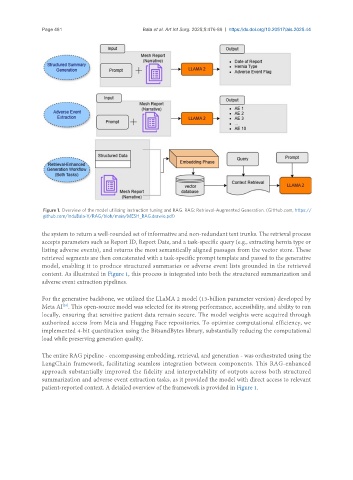
                Figure 1. Overview of the model utilizing instruction tuning and RAG. RAG: Retrieval-Augmented Generation. (GitHub.com, https://
                github.com/InduBala-Y/RAG/blob/main/MESH_RAG.drawio.pdf)

               the system to return a well-rounded set of informative and non-redundant text trunks. The retrieval process
               accepts parameters such as Report ID, Report Date, and a task-specific query (e.g., extracting hernia type or
               listing adverse events), and returns the most semantically aligned passages from the vector store. These
               retrieved segments are then concatenated with a task-specific prompt template and passed to the generative
               model, enabling it to produce structured summaries or adverse event lists grounded in the retrieved
               content. As illustrated in Figure 1, this process is integrated into both the structured summarization and
               adverse event extraction pipelines.


               For the generative backbone, we utilized the LLaMA 2 model (13-billion parameter version) developed by
               Meta AI . This open-source model was selected for its strong performance, accessibility, and ability to run
                      [29]
               locally, ensuring that sensitive patient data remain secure. The model weights were acquired through
               authorized access from Meta and Hugging Face repositories. To optimize computational efficiency, we
               implemented 4-bit quantization using the BitsandBytes library, substantially reducing the computational
               load while preserving generation quality.


               The entire RAG pipeline - encompassing embedding, retrieval, and generation - was orchestrated using the
               LangChain framework, facilitating seamless integration between components. This RAG-enhanced
               approach substantially improved the fidelity and interpretability of outputs across both structured
               summarization and adverse event extraction tasks, as it provided the model with direct access to relevant
               patient-reported context. A detailed overview of the framework is provided in Figure 1.

