


Page 32 - Read Online
P. 32
Talwar et al. Art Int Surg. 2025;5:418-24  https://dx.doi.org/10.20517/ais.2025.22                                                         Page 420


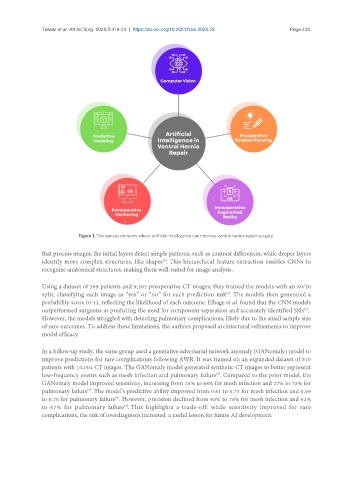
                            Figure 1. The various domains where artificial intelligence can improve ventral hernia repair surgery.

               that process images; the initial layers detect simple patterns, such as contrast differences, while deeper layers
                                                        [8]
               identify more complex structures, like shapes . This hierarchical feature extraction enables CNNs to
               recognize anatomical structures, making them well-suited for image analysis.


               Using a dataset of 369 patients and 9,303 preoperative CT images, they trained the models with an 80/20
                                                                             [6]
               split, classifying each image as “yes” or “no” for each prediction task . The models then generated a
               probability score (0-1), reflecting the likelihood of each outcome. Elhage et al. found that the CNN models
                                                                                                        [6]
               outperformed surgeons in predicting the need for component separation and accurately identified SSIs .
               However, the models struggled with detecting pulmonary complications, likely due to the small sample size
               of rare outcomes. To address these limitations, the authors proposed architectural refinements to improve
               model efficacy.

               In a follow-up study, the same group used a generative adversarial network anomaly (GANomaly) model to
               improve predictions for rare complications following AWR. It was trained on an expanded dataset of 510
               patients with 10,004 CT images. The GANomaly model generated synthetic CT images to better represent
                                                                          [9]
               low-frequency events such as mesh infection and pulmonary failure . Compared to the prior model, the
               GANomaly model improved sensitivity, increasing from 25% to 68% for mesh infection and 27% to 73% for
                              [9]
               pulmonary failure . The model’s predictive ability improved from 0.61 to 0.73 for mesh infection and 0.59
               to 0.70 for pulmonary failure . However, precision declined from 93% to 78% for mesh infection and 92%
                                        [9]
               to  67%  for  pulmonary  failure . This  highlights  a  trade-off:  while  sensitivity  improved  for  rare
                                           [9]
               complications, the risk of overdiagnosis increased, a useful lesson for future AI development.

