


Page 11 - Read Online
P. 11
Nappi et al. Vessel Plus 2021;5:40  https://dx.doi.org/10.20517/2574-1209.2021.06  Page 5 of 20


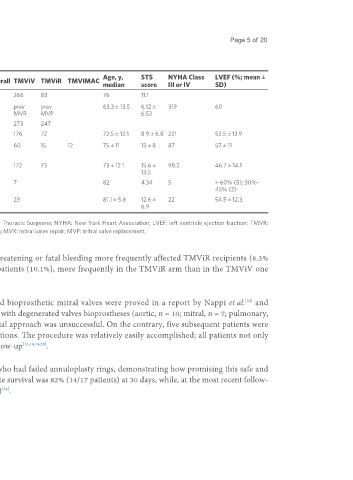
 Table 1. Baseline characteristics of all patients in transcatheter approach group [1,15,23,24,26,31]

                                    Age, y,      STS      NYHA Class      LVEF (%; mean ±
 Overall TMViV TMViR TMVIMAC
                                    median       score    III or IV       SD)

 US Registry  349  266  83          76           11.1
 Brigham and Women’s Hospital  520  prev   prev   63.3 ± 13.5  6.12 ±   319  60
      MVR      MVP                               6.52

      273      247
 TMVR Registry  248  176  72        72.5 ± 12.1  8.9 ± 6.8 221            52.5 ± 13.9
 Mayo Clinic, NY University Medical Centre, Intermounitain Heart Institute, University of   87  60  15  12  75 ± 11  13 ± 8  87  57 ± 11
 Alabama, St. Michael’s Hospital, Centre Cardiologique du Nord
 Multicentre Published reports (2009-2018)  245  172  73  73 ± 12.1  15.6 ±   98.2  46.7 ± 14.1
                                                 13.5
 Flinders Medical Centre (Adelaide) (2017-2018)  7  7  82  4.34  5        > 60% (5); 30%-
                                                                          45% (2)
 St. Paul’s Hospital (Vancouver, Canada)  23  23  81.1 ± 5.8  12.6 ±   22  54.5 ± 12.3
                                                 6.9

 TMViV: Transcatheter mitral valve-in-valve; TMViR: transcatheter mitral valve-in-ring; STS: Society of Thoracic Surgeons; NYHA: New York Heart Association; LVEF: left ventricle ejection fraction; TMVR:
 transcatheter mitral valve replacement; TMVIMAC: transchateter mitral valve in mitral annular calcification; MVR: mitral valve repair; MVP: mitral valve replacement.


 TMViV (6.9% vs. 2.3%; P = 0.07), respectively. The concern related to life-threatening or fatal bleeding more frequently affected TMViR recipients (8.3%

 TMViR vs. 2.3% TMViV; P = 0.03), while reoperation was necessary for 25 patients (10.1%), more frequently in the TMViR arm than in the TMViV one
 (16.7% vs. 7.4%; P = 0.03) [18,26] .


 The survival benefits of TMViV-T in a small number of patients with failed bioprosthetic mitral valves were proved in a report by Nappi et al.  and
                                                                                    [32]
 Webb et al.  nearly 10 years ago. TMViV-T was used for 24 high-risk patients with degenerated valves bioprostheses (aortic, n = 10; mitral, n = 7; pulmonary,
 [33]
 n = 6; or tricuspid, n = 1). The first-in-human use of a percutaneous transseptal approach was unsuccessful. On the contrary, five subsequent patients were
 managed successfully with the use of transapical access for TMViV implantations. The procedure was relatively easily accomplished; all patients not only

 survived at 30-day follow-up, but there was no mortality at a median 72-day follow-up [16,18,19,28] .


 TMViR has been used since 2010 in a restricted number of patients (n = 17) who had failed annuloplasty rings, demonstrating how promising this safe and

 efficacious approach is for this type of mechanical intervention. The survival rate survival was 82% (14/17 patients) at 30 days, while, at the most recent follow-
 up (13 ± 5 months), the percentage of surviving patients dropped to 71% (12/17) .
  [34]

