


Page 54 - Read Online
P. 54
Ren et al. Soft Sci. 2026, 6, 6                                                  Page 25 of 33


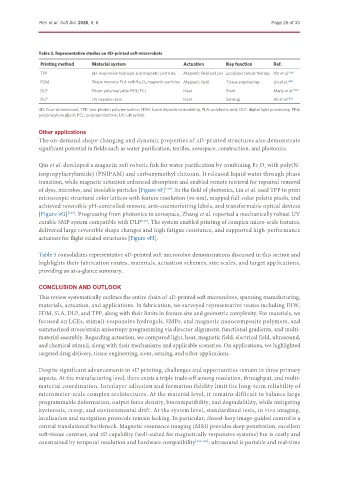
               Table 3. Representative studies on 4D-printed soft microrobots
               Printing method   Material system                 Actuation      Key function     Ref.

               TPP               pH-responsive hydrogel and magnetic particles  Magnetic field and pH Localized cancer therapy Xin et al. [136]
               FDM               Shape memory PLA with Fe 3 O 4  magnetic particles Magnetic field  Tissue engineering  Lin et al. [145]
               DLP               Photo-polymerizable PPG/PCL     Heat           Stent            Maity et al. [150]
               DLP               UV-curable resin                Heat           Sensing          Ali et al. [153]
               4D: Four-dimensional; TPP: two-photon polymerization; FDM: fused deposition modeling; PLA: polylactic acid; DLP: digital light processing; PPG:
               polypropylene glycol; PCL: polycaprolactone; UV: ultraviolet.

               Other applications
               The on-demand shape-changing and dynamic properties of 4D-printed structures also demonstrate
               significant potential in fields such as water purification, textiles, aerospace, construction, and photonics.

               Qin et al. developed a magnetic soft robotic fish for water purification by combining Fe O  with poly(N-
                                                                                              4
                                                                                            3
               isopropylacrylamide) (PNIPAM) and carboxymethyl chitosan. It released liquid water through phase
               transition, while magnetic actuation enhanced absorption and enabled remote retrieval for repeated removal
               of dyes, microbes, and insoluble particles [Figure 9F] . In the field of photonics, Liu et al. used TPP to print
                                                           [158]
               microscopic structural color lattices with feature resolution (98 nm), mapped full-color palette pixels, and
               achieved reversible pH-controlled sensors, anti-counterfeiting labels, and transformable optical devices
               [Figure 9G] [159] . Progressing from photonics to aerospace, Zhang et al. reported a mechanically robust UV
               curable SMP system compatible with DLP . The system enabled printing of complex micro-scale features,
                                                   [160]
               delivered large reversible shape changes and high fatigue resistance, and supported high-performance
               actuators for flight-related structures [Figure 9H].


               Table 3 consolidates representative 4D-printed soft microrobot demonstrations discussed in this section and
               highlights their fabrication routes, materials, actuation schemes, size scales, and target applications,
               providing an at-a-glance summary.


               CONCLUSION AND OUTLOOK
               This review systematically outlines the entire chain of 4D-printed soft microrobots, spanning manufacturing,
               materials, actuation, and applications. In fabrication, we surveyed representative routes including DIW,
               FDM, SLA, DLP, and TPP, along with their limits in feature size and geometric complexity. For materials, we
               focused on LCEs, stimuli-responsive hydrogels, SMPs, and magnetic nanocomposite polymers, and
               summarized stress/strain anisotropy programming via director alignment, functional gradients, and multi-
               material assembly. Regarding actuation, we compared light, heat, magnetic field, electrical field, ultrasound,
               and chemical stimuli, along with their mechanisms and applicable scenarios. On applications, we highlighted
               targeted drug delivery, tissue engineering, stent, sensing, and other applications.


               Despite significant advancements in 4D printing, challenges and opportunities remain in three primary
               aspects. At the manufacturing level, there exists a triple trade-off among resolution, throughput, and multi-
               material coordination. Interlayer adhesion and formation fidelity limit the long-term reliability of
               micrometer-scale complex architectures. At the material level, it remains difficult to balance large
               programmable deformation, output force density, biocompatibility, and degradability, while mitigating
               hysteresis, creep, and environmental drift. At the system level, standardized tests, in vivo imaging,
               localization and navigation protocols remain lacking. In particular, closed-loop image-guided control is a
               central translational bottleneck. Magnetic resonance imaging (MRI) provides deep penetration, excellent
               soft-tissue contrast, and 3D capability (well-suited for magnetically responsive systems) but is costly and
               constrained by temporal resolution and hardware compatibility [161,162] ; ultrasound is portable and real-time

