


Page 339 - Read Online
P. 339
Page 10 of 14                                                    Khan. Plast Aesthet Res 2018;5:45  I  http://dx.doi.org/10.20517/2347-9264.2018.58


                A                                            B


                C                                            D


                E                                            F


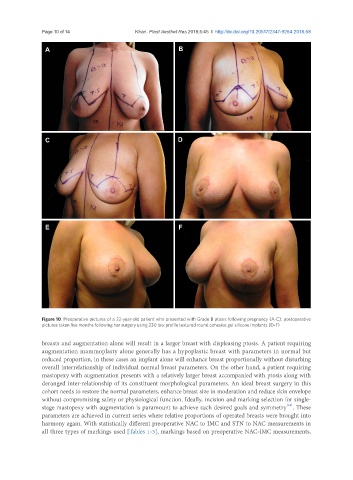
               Figure 10. Preoperative pictures of a 22-year-old patient who presented with Grade B ptosis following pregnancy (A-C); postoperative
               pictures taken five months following her surgery using 230 low profile textured round cohesive gel silicone implants (D-F)

               breasts and augmentation alone will result in a larger breast with displeasing ptosis. A patient requiring
               augmentation mammoplasty alone generally has a hypoplastic breast with parameters in normal but
               reduced proportion, in these cases an implant alone will enhance breast proportionally without disturbing
               overall interrelationship of individual normal breast parameters. On the other hand, a patient requiring
               mastopexy with augmentation presents with a relatively larger breast accompanied with ptosis along with
               deranged inter-relationship of its constituent morphological parameters. An ideal breast surgery in this
               cohort needs to restore the normal parameters, enhance breast size in moderation and reduce skin envelope
               without compromising safety or physiological function. Ideally, incision and marking selection for single-
                                                                                                  [18]
               stage mastopexy with augmentation is paramount to achieve such desired goals and symmetry . These
               parameters are achieved in current series where relative proportions of operated breasts were brought into
               harmony again. With statistically different preoperative NAC to IMC and STN to NAC measurements in
               all three types of markings used [Tables 1-3], markings based on preoperative NAC-IMC measurements,

