


Page 49 - Read Online
P. 49
Iruzubieta et al. Metab Target Organ Damage. 2025;5:10  https://dx.doi.org/10.20517/mtod.2024.143  Page 11 of 16


               Table 1. Key strategies for implementing MASLD in healthcare systems
                Implementation area      Recommended steps
                Education and training   -Implement targeted educational programs for healthcare professionals (primary care, hepatology,
                                         endocrinology) to ensure they understand MASLD’s diagnostic criteria and implications
                                         -Develop online resources, workshops, and continuing medical education activities to facilitate
                                         knowledge dissemination
                Standardization of diagnostic protocols -Establish clear clinical guidelines to ensure uniform MASLD diagnosis
                                         -Prioritize the use of non-invasive tools (FIB-4, transient elastography), making MASLD evaluation more
                                         accessible
                Integration into International and   -Advocate for ICD-11 updates to incorporate MASLD
                National Coding Systems  -Provide guidance for policymakers and healthcare administrators on updating electronic records while
                                         ensuring data continuity
                Public health initiatives and awareness  -Launch awareness campaigns to educate patients and reduce confusion about the terminology change
                campaigns                -Develop patient-friendly materials to improve engagement and promote early screening
                Adaptation for resource-limited   -Focus on cost-effective screening approaches, prioritizing metabolic risk assessment in primary care
                settings                 -Leverage telemedicine to expand access to education and diagnostic support
               MASLD: Metabolic dysfunction-associated steatotic liver disease; ICD: International Classification of Diseases.


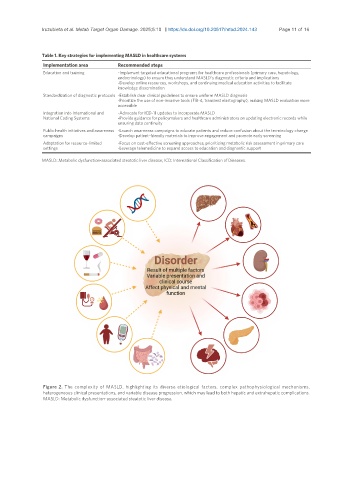
                Figure  2.  The  complexity  of  MASLD,  highlighting  its  diverse  etiological  factors,  complex  pathophysiological  mechanisms,
                heterogeneous clinical presentations, and variable disease progression, which may lead to both hepatic and extrahepatic complications.
                MASLD: Metabolic dysfunction-associated steatotic liver disease.

