


Page 42 - Read Online
P. 42
Page 4 of 16      Iruzubieta et al. Metab Target Organ Damage. 2025;5:10  https://dx.doi.org/10.20517/mtod.2024.143


                                                                *
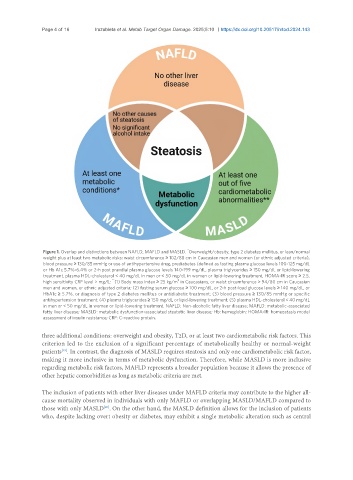
                Figure 1. Overlap and distinctions between NAFLD, MAFLD and MASLD.  Overweight/obesity, type 2 diabetes mellitus, or lean/normal
                weight plus at least two metabolic risks: waist circumference ≥ 102/88 cm in Caucasian men and women (or ethnic adjusted criteria),
                blood pressure ≥ 130/85 mmHg or use of antihypertensive drug, prediabetes (defined as fasting plasma glucose levels 100-125 mg/dL
                or Hb A1c 5.7%-6.4% or 2-h post prandial plasma glucose levels 140-199 mg/dL, plasma triglycerides ≥ 150 mg/dL or lipid-lowering
                treatment, plasma HDL-cholesterol < 40 mg/dL in men or < 50 mg/dL in women or lipid-lowering treatment, HOMA-IR score ≥ 2.5,
                                                             2
                                       **
                high sensitivity CRP level > mg/L;  (1) Body mass index ≥ 25 kg/m  in Caucasians, or waist circumference > 94/80 cm in Caucasian
                men and women, or ethnic adjusted criteria; (2) fasting serum glucose ≥ 100 mg/dL, or 2-h post-load glucose levels ≥ 140 mg/dL, or
                HbA1c ≥ 5.7%, or diagnosis of type 2 diabetes mellitus or antidiabetic treatment; (3) blood pressure ≥ 130/85 mmHg or specific
                antihypertension treatment; (4) plasma triglycerides ≥ 150 mg/dL or lipid-lowering treatment; (5) plasma HDL-cholesterol < 40 mg/dL
                in men or < 50 mg/dL in women or lipid-lowering treatment. NAFLD: Non-alcoholic fatty liver disease; MAFLD: metabolic-associated
                fatty liver disease; MASLD: metabolic dysfunction-associated steatotic liver disease; Hb: hemoglobin; HOMA-IR: homeostasis model
                assessment of insulin resistance; CRP: C-reactive protein.

               three additional conditions: overweight and obesity, T2D, or at least two cardiometabolic risk factors. This
               criterion led to the exclusion of a significant percentage of metabolically healthy or normal-weight
               patients . In contrast, the diagnosis of MASLD requires steatosis and only one cardiometabolic risk factor,
                      [19]
               making it more inclusive in terms of metabolic dysfunction. Therefore, while MASLD is more inclusive
               regarding metabolic risk factors, MAFLD represents a broader population because it allows the presence of
               other hepatic comorbidities as long as metabolic criteria are met.


               The inclusion of patients with other liver diseases under MAFLD criteria may contribute to the higher all-
               cause mortality observed in individuals with only MAFLD or overlapping MASLD/MAFLD compared to
               those with only MASLD . On the other hand, the MASLD definition allows for the inclusion of patients
                                    [20]
               who, despite lacking overt obesity or diabetes, may exhibit a single metabolic alteration such as central

