


Page 10 - Read Online
P. 10
Page 4 of           Ciardullo et al. Metab Target Organ Damage 2024;4:30  https://dx.doi.org/10.20517/mtod.2024.39


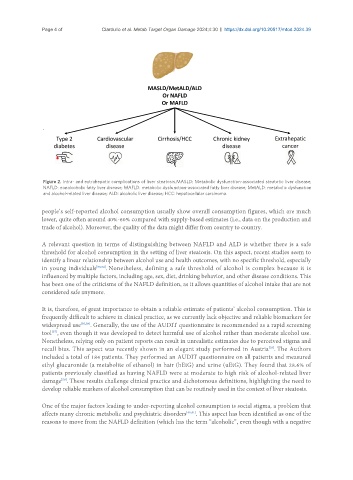
                Figure 2. Intra- and extrahepatic complications of liver steatosis.MASLD: Metabolic dysfunction-associated steatotic liver disease;
                NAFLD: nonalcoholic fatty liver disease; MAFLD: metabolic dysfunction-associated fatty liver disease; MetALD: metabolic dysfunction
                and alcohol-related liver disease; ALD: alcoholic liver disease; HCC: hepatocellular carcinoma.


               people’s self-reported alcohol consumption usually show overall consumption figures, which are much
               lower, quite often around 40%-60% compared with supply-based estimates (i.e., data on the production and
               trade of alcohol). Moreover, the quality of the data might differ from country to country.


               A relevant question in terms of distinguishing between NAFLD and ALD is whether there is a safe
               threshold for alcohol consumption in the setting of liver steatosis. On this aspect, recent studies seem to
               identify a linear relationship between alcohol use and health outcomes, with no specific threshold, especially
               in young individuals [53,54] . Nonetheless, defining a safe threshold of alcohol is complex because it is
               influenced by multiple factors, including age, sex, diet, drinking behavior, and other disease conditions. This
               has been one of the criticisms of the NAFLD definition, as it allows quantities of alcohol intake that are not
               considered safe anymore.

               It is, therefore, of great importance to obtain a reliable estimate of patients’ alcohol consumption. This is
               frequently difficult to achieve in clinical practice, as we currently lack objective and reliable biomarkers for
               widespread use [55,56] . Generally, the use of the AUDIT questionnaire is recommended as a rapid screening
               tool , even though it was developed to detect harmful use of alcohol rather than moderate alcohol use.
                  [57]
               Nonetheless, relying only on patient reports can result in unrealistic estimates due to perceived stigma and
                                                                                            [58]
               recall bias. This aspect was recently shown in an elegant study performed in Austria . The Authors
               included a total of 184 patients. They performed an AUDIT questionnaire on all patients and measured
               ethyl glucuronide (a metabolite of ethanol) in hair (hEtG) and urine (uEtG). They found that 28.6% of
               patients previously classified as having NAFLD were at moderate to high risk of alcohol-related liver
               damage . These results challenge clinical practice and dichotomous definitions, highlighting the need to
                      [59]
               develop reliable markers of alcohol consumption that can be routinely used in the context of liver steatosis.

               One of the major factors leading to under-reporting alcohol consumption is social stigma, a problem that
               affects many chronic metabolic and psychiatric disorders [60,61] . This aspect has been identified as one of the
               reasons to move from the NAFLD definition (which has the term “alcoholic”, even though with a negative

