


Page 58 - Read Online
P. 58
Gulati et al. Metab Target Organ Damage 2024;4:9  https://dx.doi.org/10.20517/mtod.2023.45  Page 7 of 17

               Table 2. Potential contributors of racial and ethnic disparities in MASLD: summary of findings
                Key finding                                                                      Sources
                The PNPLA3 I148M allele is found most commonly in Hispaniic individuals, then European individuals, and then non-Hispanic   [42,43]
                Black individuals
                Within Hispanic populations, the PNPLA3 I148M allele is associiated with elevated levels of AST, ALT, FIB-4 score, and increased   [44-48]
                risk of MASLD
                The frequency of the PNPLA3 I148M allele varies among Hispanicc groups, with Mexican individuals having the highest frequency,  [48]
                followed by South Americans, Central Americans, Puerto Ricans, Cubans, and lastly Dominicans
                Within Hispanic populations, low plasma concentrations of very long chain n-3 polyunsaturated fatty acids and very long chain   [51,52]
                saturated fatty acids are rongly associated with advanced liver fibrosis
                There is a positive association between exposures including arsenic and mercury and risk of MASLD, with the highest exposure   [58,59]
                seen among Mexican Americans and those of Hispanic ethnicity
                Behavioral risk factors, including high-fat, high-carbohydrate diet and sedentary behavior, are risk factors for all populations to   [5,63-66,71-
                develop MASLD,regardless of race and ethnicity                                   76]
                Socioeconomic factors, including income, education, and health insurance status, likely play a role in contributing to racial and   [80-84]
                ethnic disparities in MASLD
               AST: aspartate aminotransferase; ALT: alanine aminotransferase; FIB-4: fibrosis-4 index; MASLD: Metabolic dysfunction-associated steatotic
               liver disease.


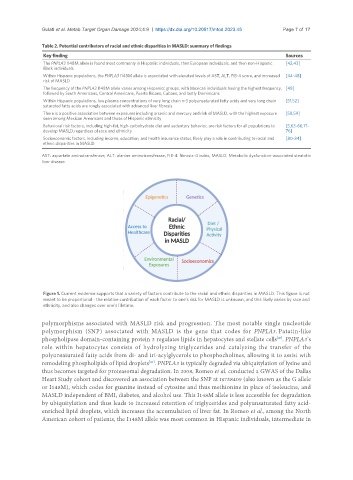
                Figure 1. Current evidence supports that a variety of factors contribute to the racial and ethnic disparities in MASLD. This figure is not
                meant to be proportional - the relative contribution of each factor to one’s risk for MASLD is unknown, and this likely varies by race and
                ethnicity, and also changes over one’s lifetime.

               polymorphisms associated with MASLD risk and progression. The most notable single nucleotide
               polymorphism  (SNP)  associated  with  MASLD  is  the  gene  that  codes  for  PNPLA3. Patatin-like
               phospholipase domain-containing protein 3 regulates lipids in hepatocytes and stellate cells . PNPLA3’s
                                                                                              [40]
               role  within  hepatocytes  consists  of  hydrolyzing  triglycerides  and  catalyzing  the  transfer  of  the
               polyunsaturated fatty acids from di- and tri-acylglycerols to phosphocholines, allowing it to assist with
               remodeling phospholipids of lipid droplets . PNPLA3 is typically degraded via ubiquitylation of lysine and
                                                   [41]
               thus becomes targeted for proteasomal degradation. In 2008, Romeo et al. conducted a GWAS of the Dallas
               Heart Study cohort and discovered an association between the SNP at rs738409 (also known as the G allele
               or I148M), which codes for guanine instead of cytosine and thus methionine in place of isoleucine, and
               MASLD independent of BMI, diabetes, and alcohol use. This I148M allele is less accessible for degradation
               by ubiquitylation and thus leads to increased retention of triglycerides and polyunsaturated fatty acid-
               enriched lipid droplets, which increases the accumulation of liver fat. In Romeo et al., among the North
               American cohort of patients, the I148M allele was most common in Hispanic individuals, intermediate in

