


Page 151 - Read Online
P. 151
Sharma et al. Microbiome Res Rep 2024;3:3  https://dx.doi.org/10.20517/mrr.2023.51  Page 11 of 17


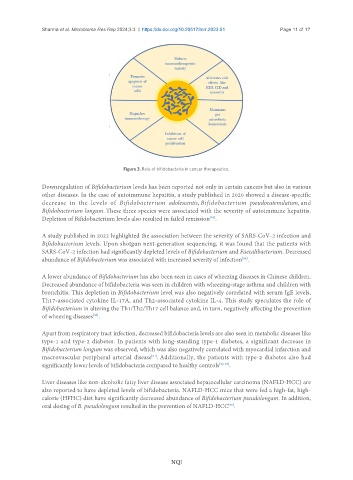
                                           Figure 3. Role of bifidobacteria in cancer therapeutics.

               Downregulation of Bifidobacterium levels has been reported not only in certain cancers but also in various
               other diseases. In the case of autoimmune hepatitis, a study published in 2020 showed a disease-specific
               decrease  in  the  levels  of  Bifidobacterium  adolescentis, Bifidobacterium  pseudocatenulatum, and
               Bifidobacterium longum. These three species were associated with the severity of autoimmune hepatitis.
                                                                        [88]
               Depletion of Bifidobacterium levels also resulted in failed remission .

               A study published in 2022 highlighted the association between the severity of SARS-CoV-2 infection and
               Bifidobacterium levels. Upon shotgun next-generation sequencing, it was found that the patients with
               SARS-CoV-2 infection had significantly depleted levels of Bifidobacterium and Faecalibacterium. Decreased
               abundance of Bifidobacterium was associated with increased severity of infection .
                                                                                   [89]
               A lower abundance of Bifidobacterium has also been seen in cases of wheezing diseases in Chinese children.
               Decreased abundance of bifidobacteria was seen in children with wheezing-stage asthma and children with
               bronchitis. This depletion in Bifidobacterium level was also negatively correlated with serum IgE levels,
               Th17-associated cytokine IL-17A, and Th2-associated cytokine IL-4. This study speculates the role of
               Bifidobacterium in altering the Th1/Th2/Th17 cell balance and, in turn, negatively affecting the prevention
                                [90]
               of wheezing diseases .
               Apart from respiratory tract infection, decreased bifidobacteria levels are also seen in metabolic diseases like
               type-1 and type-2 diabetes. In patients with long-standing type-1 diabetes, a significant decrease in
               Bifidobacterium longum was observed, which was also negatively correlated with myocardial infarction and
                                                    [91]
               macrovascular peripheral arterial disease . Additionally, the patients with type-2 diabetes also had
               significantly lower levels of bifidobacteria compared to healthy controls [92-94] .


               Liver diseases like non-alcoholic fatty liver disease associated hepatocellular carcinoma (NAFLD-HCC) are
               also reported to have depleted levels of bifidobacteria. NAFLD-HCC mice that were fed a high-fat, high-
               calorie (HFHC) diet have significantly decreased abundance of Bifidobacterium pseudolongam. In addition,
                                                                              [95]
               oral dosing of B. pseudolongum resulted in the prevention of NAFLD-HCC .

