


Page 144 - Read Online
P. 144
Page 4 of 17                 Sharma et al. Microbiome Res Rep 2024;3:3  https://dx.doi.org/10.20517/mrr.2023.51


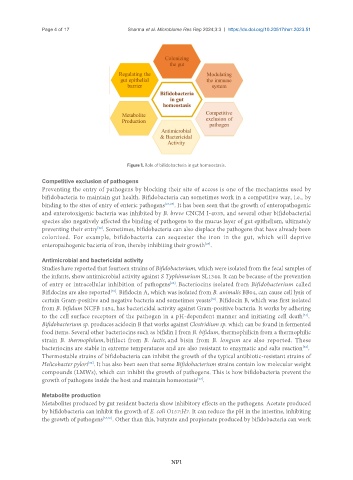
                                            Figure 1. Role of bifidobacteria in gut homeostasis.


               Competitive exclusion of pathogens
               Preventing the entry of pathogens by blocking their site of access is one of the mechanisms used by
               bifidobacteria to maintain gut health. Bifidobacteria can sometimes work in a competitive way, i.e., by
               binding to the sites of entry of enteric pathogens [24,25] . It has been seen that the growth of enteropathogenic
               and enterotoxigenic bacteria was inhibited by B. breve CNCM I-4035, and several other bifidobacterial
               species also negatively affected the binding of pathogens to the mucus layer of gut epithelium, ultimately
               preventing their entry . Sometimes, bifidobacteria can also displace the pathogens that have already been
                                  [26]
               colonized.  For  example,  bifidobacteria  can  sequester  the  iron  in  the  gut,  which  will  deprive
               enteropathogenic bacteria of iron, thereby inhibiting their growth .
                                                                      [27]
               Antimicrobial and bactericidal activity
               Studies have reported that fourteen strains of Bifidobacterium, which were isolated from the fecal samples of
               the infants, show antimicrobial activity against S Typhimurium SL1344. It can be because of the prevention
                                                          [28]
               of entry or intracellular inhibition of pathogens . Bacteriocins isolated from Bifidobacterium called
               Bifidocins are also reported . Bifidocin A, which was isolated from B. animalis BB04, can cause cell lysis of
                                      [29]
               certain Gram-positive and negative bacteria and sometimes yeasts . Bifidocin B, which was first isolated
                                                                        [30]
               from B. bifidum NCFB 1454, has bactericidal activity against Gram-positive bacteria. It works by adhering
               to the cell surface receptors of the pathogen in a pH-dependent manner and initiating cell death .
                                                                                                       [31]
               Bifidobacterium sp. produces acidocin B that works against Clostridium sp. which can be found in fermented
               food items. Several other bacteriocins such as bifidin I from B. bifidum, thermophilicin from a thermophilic
               strain B. thermophilum, bifilact from B. lactis, and bisin from B. longum are also reported. These
               bacteriocins are stable in extreme temperatures and are also resistant to enzymatic and salts reaction .
                                                                                                       [32]
               Thermostable strains of bifidobacteria can inhibit the growth of the typical antibiotic-resistant strains of
               Helicobacter pylori . It has also been seen that some Bifidobacterium strains contain low molecular weight
                               [32]
               compounds (LMWs), which can inhibit the growth of pathogens. This is how bifidobacteria prevent the
               growth of pathogens inside the host and maintain homeostasis .
                                                                    [33]

               Metabolite production
               Metabolites produced by gut resident bacteria show inhibitory effects on the pathogens. Acetate produced
               by bifidobacteria can inhibit the growth of E. coli O157:H7. It can reduce the pH in the intestine, inhibiting
               the growth of pathogens [34,35] . Other than this, butyrate and propionate produced by bifidobacteria can work

