Page 74 - Read Online
P. 74
Page 6 of 9 Sánchez et al. Mini-invasive Surg 2024;8:36 https://dx.doi.org/10.20517/2574-1225.2024.72
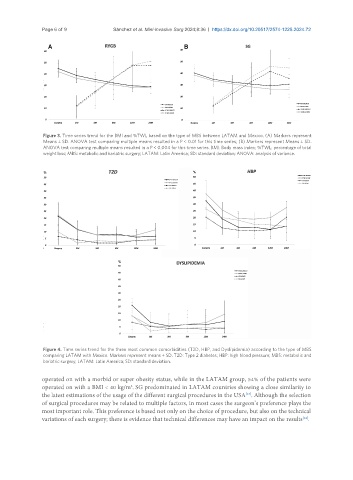
Figure 3. Time series trend for the BMI and %TWL based on the type of MBS between LATAM and Mexico. (A) Markers represent
Means ± SD. ANOVA test comparing multiple means resulted in a P < 0.01 for this time series; (B) Markers represent Means ± SD.
ANOVA test comparing multiple means resulted in a P < 0.004 for this time series. BMI: Body mass index; %TWL: percentage of total
weight loss; MBS: metabolic and bariatric surgery; LATAM: Latin America; SD: standard deviation; ANOVA: analysis of variance.
Figure 4. Time series trend for the three most common comorbidities (T2D, HBP, and Dyslipidemia) according to the type of MBS
comparing LATAM with Mexico. Markers represent means ± SD. T2D: Type 2 diabetes; HBP: high blood pressure; MBS: metabolic and
bariatric surgery; LATAM: Latin America; SD: standard deviation.
operated on with a morbid or super obesity status, while in the LATAM group, 54% of the patients were
operated on with a BMI < 40 kg/m . SG predominated in LATAM countries showing a close similarity to
2
[13]
the latest estimations of the usage of the different surgical procedures in the USA . Although the selection
of surgical procedures may be related to multiple factors, in most cases the surgeon’s preference plays the
most important role. This preference is based not only on the choice of procedure, but also on the technical
[14]
variations of each surgery; there is evidence that technical differences may have an impact on the results .