Page 64 - Read Online
P. 64
Page 4 of 8 Spurzem et al. Mini-invasive Surg. 2025;9:10 https://dx.doi.org/10.20517/2574-1225.2024.96
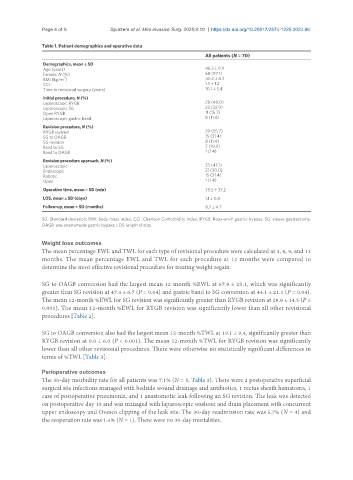
Table 1. Patient demographics and operative data
All patients (N = 70)
Demographics, mean ± SD
Age (years) 46.3 ± 9.9
Female, N (%) 68 (97.1)
2
BMI (kg/m ) 40.2 ± 6.3
CCI 1.3 ± 1.2
Time to revisional surgery (years) 10.1 ± 5.4
Initial procedure, N (%)
Laparoscopic RYGB 28 (40.0)
Laparoscopic SG 23 (32.9)
Open RYGB 11 (15.7)
Laparoscopic gastric band 8 (11.4)
Revision procedure, N (%)
RYGB revision 39 (55.7)
SG to OAGB 15 (21.4)
SG revision 8 (11.4)
Band to SG 7 (10.0)
Band to OAGB 1 (1.4)
Revision procedure approach, N (%)
Laparoscopic 33 (47.1)
Endoscopic 21 (30.0)
Robotic 15 (21.4)
Open 1 (1.4)
Operative time, mean ± SD (min) 79.5 ± 37.2
LOS, mean ± SD (days) 1.1 ± 0.8
Follow-up, mean ± SD (months) 8.7 ± 4.7
SD: Standard deviation; BMI: body mass index; CCI: Charlson Comorbidity Index; RYGB: Roux-en-Y gastric bypass; SG: sleeve gastrectomy;
OAGB: one anastomosis gastric bypass; LOS: length of stay.
Weight loss outcomes
The mean percentage EWL and TWL for each type of revisional procedure were calculated at 3, 6, 9, and 12
months. The mean percentage EWL and TWL for each procedure at 12 months were compared to
determine the most effective revisional procedure for treating weight regain.
SG to OAGB conversion had the largest mean 12-month %EWL at 67.9 ± 25.1, which was significantly
greater than SG revision at 47.4 ± 6.7 (P = 0.04) and gastric band to SG conversion at 44.1 ± 21.1 (P = 0.04).
The mean 12-month %EWL for SG revision was significantly greater than RYGB revision at 28.9 ± 14.5 (P =
0.001). The mean 12-month %EWL for RYGB revision was significantly lower than all other revisional
procedures [Table 2].
SG to OAGB conversion also had the largest mean 12-month %TWL at 19.1 ± 9.4, significantly greater than
RYGB revision at 9.0 ± 6.0 (P < 0.001). The mean 12-month %TWL for RYGB revision was significantly
lower than all other revisional procedures. There were otherwise no statistically significant differences in
terms of %TWL [Table 3].
Perioperative outcomes
The 30-day morbidity rate for all patients was 7.1% (N = 5, Table 3). There were 2 postoperative superficial
surgical site infections managed with bedside wound drainage and antibiotics, 1 rectus sheath hematoma, 1
case of postoperative pneumonia, and 1 anastomotic leak following an SG revision. The leak was detected
on postoperative day 18 and was managed with laparoscopic washout and drain placement with concurrent
upper endoscopy and Ovesco clipping of the leak site. The 30-day readmission rate was 5.7% (N = 4) and
the reoperation rate was 1.4% (N = 1). There were no 30-day mortalities.