


Page 75 - Read Online
P. 75
Page 259                          Liu et al. Intell Robot 2024;4(3):256-75  I http://dx.doi.org/10.20517/ir.2024.17


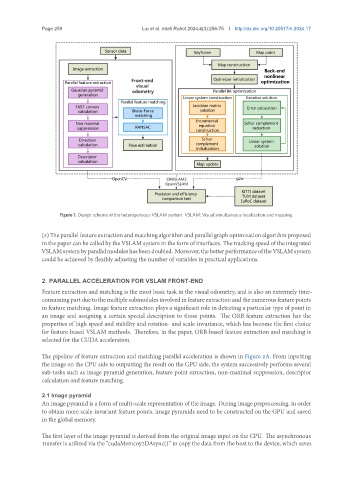
                     Figure 1. Design scheme of the heterogeneous VSLAM system. VSLAM: Visual simultaneous localization and mapping.


               (3)Theparallelfeatureextractionandmatchingalgorithmandparallelgraphoptimizationalgorithmproposed
               in the paper can be called by the VSLAM system in the form of interfaces. The tracking speed of the integrated
               VSLAMsystembyparallelmoduleshasbeendoubled. Moreover,thebetterperformanceoftheVSLAMsystem
               could be achieved by flexibly adjusting the number of variables in practical applications.


               2. PARALLEL ACCELERATION FOR VSLAM FRONT-END
               Feature extraction and matching is the most basic task in the visual odometry, and is also an extremely time-
               consumingpartduetothemultiplesubmodulesinvolvedinfeatureextractionandthenumerousfeaturepoints
               in feature matching. Image feature extraction plays a significant role in detecting a particular type of point in
               an image and assigning a certain special description to those points. The ORB feature extraction has the
               properties of high speed and stability and rotation- and scale-invariance, which has become the first choice
               for feature-based VSLAM methods. Therefore, in the paper, ORB-based feature extraction and matching is
               selected for the CUDA acceleration.

               The pipeline of feature extraction and matching parallel acceleration is shown in Figure 2A. From inputting
               the image on the CPU side to outputting the result on the GPU side, the system successively performs several
               sub-tasks such as image pyramid generation, feature point extraction, non-maximal suppression, descriptor
               calculation and feature matching.


               2.1 Image pyramid
               An image pyramid is a form of multi-scale representation of the image. During image preprocessing, in order
               to obtain more scale-invariant feature points, image pyramids need to be constructed on the GPU and saved
               in the global memory.

               The first layer of the image pyramid is derived from the original image input on the CPU. The asynchronous
               transfer is utilized via the “cudaMemcoy2DAsync()” to copy the data from the host to the device, which saves

