


Page 31 - Read Online
P. 31
Okaz et al. Rare Dis Orphan Drugs J. 2025;4:24  https://dx.doi.org/10.20517/rdodj.2025.15  Page 3 of 11


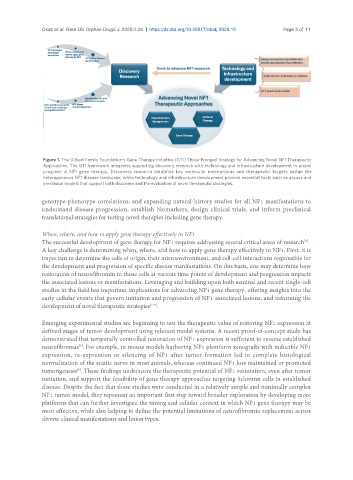
                Figure 1. The Gilbert Family Foundation’s Gene Therapy Initiative (GTI) Three-Pronged Strategy for Advancing Novel NF1 Therapeutic
                Approaches. The GTI framework integrates supporting discovery research with technology and infrastructure development to propel
                progress  in  NF1  gene  therapy.  Discovery  research  identifies  key  molecular  mechanisms  and  therapeutic  targets  within  the
                heterogeneous NF1 disease landscape, while technology and infrastructure development provide essential tools such as assays and
                preclinical models that support both discovery and the evaluation of novel therapeutic strategies.


               genotype-phenotype correlations, and expanding natural-history studies for all NF1 manifestations to
               understand disease progression, establish biomarkers, design clinical trials, and inform preclinical
               translational strategies for testing novel therapies including gene therapy.

               When, where, and how to apply gene therapy effectively in NF1
               The successful development of gene therapy for NF1 requires addressing several critical areas of research .
                                                                                                        [3]
               A key challenge is determining when, where, and how to apply gene therapy effectively in NF1. First, it is
               important to determine the cells of origin, their microenvironment, and cell-cell interactions responsible for
               the development and progression of specific disease manifestations. On this basis, one may determine how
               restoration of neurofibromin in those cells at various time points of development and progression impacts
               the associated lesions or manifestations. Leveraging and building upon both seminal and recent single-cell
               studies in the field has important implications for advancing NF1 gene therapy, offering insights into the
               early cellular events that govern initiation and progression of NF1-associated lesions, and informing the
               development of novel therapeutic strategies .
                                                    [5-8]
               Emerging experimental studies are beginning to test the therapeutic value of restoring NF1 expression at
               defined stages of tumor development using relevant model systems. A recent proof-of-concept study has
               demonstrated that temporally controlled restoration of NF1 expression is sufficient to reverse established
               neurofibromas . For example, in mouse models harboring NF1 plexiform xenografts with inducible NF1
                            [9]
               expression, re-expression or silencing of NF1 after tumor formation led to complete histological
               normalization of the sciatic nerve in most animals, whereas continued NF1 loss maintained or promoted
               tumorigenesis . These findings underscore the therapeutic potential of NF1 restoration, even after tumor
                           [9]
               initiation, and support the feasibility of gene therapy approaches targeting Schwann cells in established
               disease. Despite the fact that these studies were conducted in a relatively simple and minimally complex
               NF1 tumor model, they represent an important first step toward broader exploration by developing more
               platforms that can further investigate the timing and cellular context in which NF1 gene therapy may be
               most effective, while also helping to define the potential limitations of neurofibromin replacement across
               diverse clinical manifestations and lesion types.

