


Page 22 - Read Online
P. 22
Lightner. Rare Dis Orphan Drugs J. 2026;5:1                                        Page 3 of 9


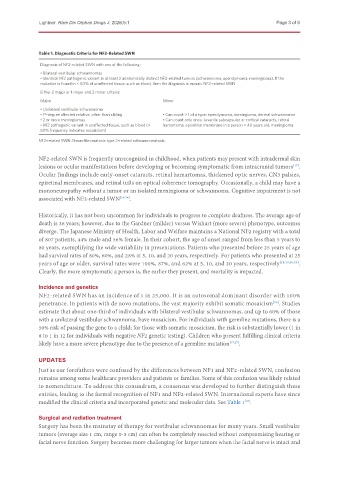
               Table 1. Diagnostic Criteria for NF2-Related SWN

               Diagnosis of NF2-related SWN with one of the following:
               • Bilateral vestibular schwannomas
               • Identical NF2 pathogenic variant in at least 2 anatomically distinct NF2-related tumors (schwannoma, ependymoma, meningioma). If the
               mutation is found in < 50% of unaffected tissue, such as blood, then the diagnosis is mosaic NF2-related SWN
               Either 2 major or 1 major and 2 minor criteria:
               Major                                      Minor
               • Unilateral vestibular schwannoma
               • 1 -degree affected relative, other than sibling  • Can count > 1 of a type: ependymoma, meningioma, dermal schwannoma
                 st
               • 2 or more meningiomas                    • Can count only once: Juvenile subcapsular or cortical cataracts, retinal
               • NF2 pathogenic variant in unaffected tissue, such as blood (<  hamartoma, epiretinal membrane in a person < 40 years old, meningioma
               50% frequency indicates mosaicism)
               NF2-related SWN: Neurofibromatosis type 2-related schwannomatosis.


               NF2-related SWN is frequently unrecognized in childhood, when patients may present with intradermal skin
               lesions or ocular manifestations before developing or becoming symptomatic from intracranial tumors .
                                                                                                        [17]
               Ocular findings include early-onset cataracts, retinal hamartomas, thickened optic nerves, CN3 palsies,
               epiretinal membranes, and retinal tufts on optical coherence tomography. Occasionally, a child may have a
               mononeuropathy without a tumor or an isolated meningioma or schwannoma. Cognitive impairment is not
               associated with NF2-related SWN [18-24] .


               Historically, it has not been uncommon for individuals to progress to complete deafness. The average age of
               death is 36 years; however, due to the Gardner (milder) versus Wishart (more severe) phenotype, outcomes
               diverge. The Japanese Ministry of Health, Labor and Welfare maintains a National NF2 registry with a total
               of 807 patients, 44% male and 56% female. In their cohort, the age of onset ranged from less than 5 years to
               80 years, exemplifying the wide variability in presentations. Patients who presented before 25 years of age
               had survival rates of 80%, 60%, and 28% at 5, 10, and 20 years, respectively. For patients who presented at 25
               years of age or older, survival rates were 100%, 87%, and 62% at 5, 10, and 20 years, respectively [18,19,20,25] .
               Clearly, the more symptomatic a person is, the earlier they present, and mortality is impacted.


               Incidence and genetics
               NF2-related SWN has an incidence of 1 in 25,000. It is an autosomal dominant disorder with 100%
               penetrance. In patients with de novo mutations, the vast majority exhibit somatic mosaicism . Studies
                                                                                                 [26]
               estimate that about one-third of individuals with bilateral vestibular schwannomas, and up to 60% of those
               with a unilateral vestibular schwannoma, have mosaicism. For individuals with germline mutations, there is a
               50% risk of passing the gene to a child; for those with somatic mosaicism, the risk is substantially lower (1 in
               8 to 1 in 12 for individuals with negative NF2 genetic testing). Children who present fulfilling clinical criteria
               likely have a more severe phenotype due to the presence of a germline mutation [17,27] .


               UPDATES
               Just as our forefathers were confused by the differences between NF1 and NF2-related SWN, confusion
               remains among some healthcare providers and patients or families. Some of this confusion was likely related
               to nomenclature. To address this conundrum, a consensus was developed to further distinguish these
               entities, leading to the formal recognition of NF1 and NF2-related SWN. International experts have since
               modified the clinical criteria and incorporated genetic and molecular data. See Table 1 .
                                                                                       [28]

               Surgical and radiation treatment
               Surgery has been the mainstay of therapy for vestibular schwannomas for many years. Small vestibular
               tumors (average size 1 cm, range 0-3 cm) can often be completely resected without compromising hearing or
               facial nerve function. Surgery becomes more challenging for larger tumors when the facial nerve is intact and

