


Page 107 - Read Online
P. 107
Page 4 of 8  Gómez-Mendoza et al. Metab Target Organ Damage. 2025;5:24  https://dx.doi.org/10.20517/mtod.2024.108


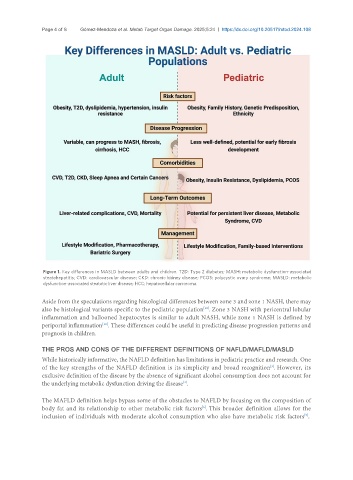
                Figure 1. Key differences in MASLD between adults and children. T2D: Type 2 diabetes; MASH: metabolic dysfunction-associated
                steatohepatitis; CVD: cardiovascular disease; CKD: chronic kidney disease; PCOS: polycystic ovary syndrome; MASLD: metabolic
                dysfunction-associated steatotic liver disease; HCC: hepatocellular carcinoma.


               Aside from the speculations regarding histological differences between zone 3 and zone 1 NASH, there may
               also be histological variants specific to the pediatric population . Zone 3 NASH with pericentral lobular
                                                                      [12]
               inflammation and ballooned hepatocytes is similar to adult NASH, while zone 1 NASH is defined by
               periportal inflammation . These differences could be useful in predicting disease progression patterns and
                                    [12]
               prognosis in children.

               THE PROS AND CONS OF THE DIFFERENT DEFINITIONS OF NAFLD/MAFLD/MASLD
               While historically informative, the NAFLD definition has limitations in pediatric practice and research. One
                                                                                            [3]
               of the key strengths of the NAFLD definition is its simplicity and broad recognition . However, its
               exclusive definition of the disease by the absence of significant alcohol consumption does not account for
                                                               [4]
               the underlying metabolic dysfunction driving the disease .
               The MAFLD definition helps bypass some of the obstacles to NAFLD by focusing on the composition of
               body fat and its relationship to other metabolic risk factors . This broader definition allows for the
                                                                     [6]
               inclusion of individuals with moderate alcohol consumption who also have metabolic risk factors .
                                                                                                        [5]

