


Page 37 - Read Online
P. 37
Nasr et al. Metab Target Organ Damage 2023;3:19  https://dx.doi.org/10.20517/mtod.2023.20  Page 3 of 17

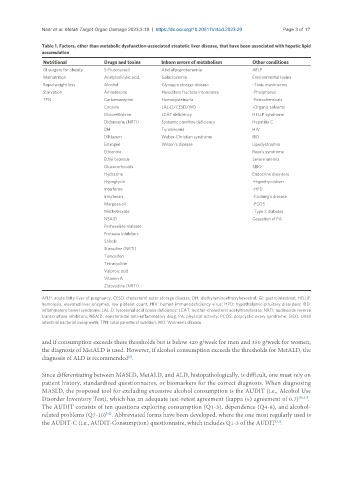
               Table 1. Factors, other than metabolic dysfunction-associated steatotic liver disease, that have been associated with hepatic lipid
               accumulation
                Nutritional         Drugs and toxins   Inborn errors of metabolism    Other conditions
                GI surgery for obesity  5-Fluorouracil  Abetalipoproteinemia          AFLP
                Malnutrition        Acetylsalicylic acid,  Galactosemia               Environmental toxins
                Rapid weight loss   Alcohol            Glycogen storage disease       -Toxic mushrooms
                Starvation          Amiodarone         Hereditary fructose intolerance  -Phosphorus
                TPN                 Carbamazepine      Homocysteinuria                -Petrochemicals
                                    Cocaine            LAL-D/CESD/WD                  -Organic solvents
                                    Diclorethylene     LCAT deficiency                HELLP syndrome
                                    Didanosine (NRTI)  Systemic carnitine deficiency  Hepatitis C
                                    DH                 Tyrosinemia                    HIV
                                    Diltiazem          Weber-Christian syndrome       IBD
                                    Estrogen           Wilson’s disease               Lipodystrophia
                                    Ethionine                                         Reye’s syndrome
                                    Ethyl bromide                                     Severe anemia
                                    Glucocorticoids                                   SIBO
                                    Hydrazine                                         Endocrine disorders
                                    Hypoglycin                                        -Hypothyroidism
                                    Interferon                                        -HPD
                                    Irinotecan                                        -Cushing’s disease
                                    Margosa oil                                       -PCOS
                                    Methotrexate                                      -Type 2 diabetes
                                    NSAID                                             Cessation of PA
                                    Perhexeline maleate
                                    Protease inhibitors
                                    Safrole
                                    Stavudine (NRTI)
                                    Tamoxifen
                                    Tetracycline
                                    Valproic acid
                                    Vitamin A
                                    Zidovudine (NRTI)
               AFLP: acute fatty liver of pregnancy; CESD: cholesterol ester storage disease; DH: diethylaminoethoxyhexestrol; GI: gastrointestinal; HELLP:
               hemolysis, elevated liver enzymes, low platelet count; HIV: human immunodeficiency virus; HPD: hypothalamic-pituitary disorders; IBD:
               inflammatory bowel syndrome; LAL-D: lysosomal acid lipase deficiency; LCAT: lecithin-cholesterol acetyltransferase; NRTI: nucleoside reverse
               transcriptase inhibitors; NSAID: nonsteroidal anti-inflammatory drug; PA: physical activity; PCOS: polycystic ovary syndrome; SIBO: small
               intestinal bacterial overgrowth; TPN: total parenteral nutrition; WD: Wolman’s disease.

               and if consumption exceeds these thresholds but is below 420 g/week for men and 350 g/week for women,
               the diagnosis of MetALD is used. However, if alcohol consumption exceeds the thresholds for MetALD, the
               diagnosis of ALD is recommended .
                                            [8]

               Since differentiating between MASLD, MetALD, and ALD, histopathologically, is difficult, one must rely on
               patient history, standardized questionnaires, or biomarkers for the correct diagnosis. When diagnosing
               MASLD, the proposed tool for excluding excessive alcohol consumption is the AUDIT (i.e., Alcohol Use
               Disorder Inventory Test), which has an adequate test-retest agreement (kappa (κ) agreement of 0.7) [30,31] .
               The AUDIT consists of ten questions exploring consumption (Q1-3), dependence (Q4-6), and alcohol-
                                     [32]
               related problems (Q7-10) . Abbreviated forms have been developed, where the one most regularly used is
               the AUDIT-C (i.e., AUDIT-Consumption) questionnaire, which includes Q1-3 of the AUDIT .
                                                                                              [33]

