


Page 10 - Read Online
P. 10
Guerra et al. J Transl Genet Genom 2022;6:304-21  https://dx.doi.org/10.20517/jtgg.2022.08  Page 308


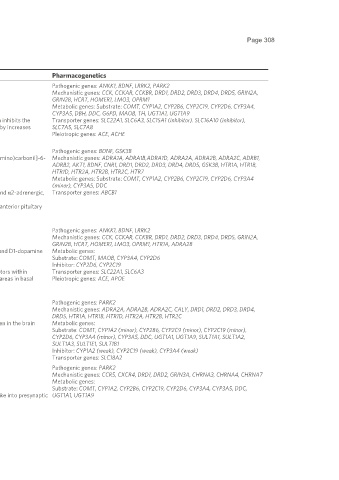
 Table 1. Pharmacogenetics of dopaminergic agonists in the treatment of neurogenic dysphagia

 Drug  Properties  Pharmacogenetics
 Name: Levodopa    Pathogenic genes: ANKK1, BDNF, LRRK2, PARK2
 IUPAC Name: l-Tyrosine-3-hydroxy   Mechanistic genes: CCK, CCKAR, CCKBR, DRD1, DRD2, DRD3, DRD4, DRD5, GRIN2A,
 Molecular Formula: C H NO    GRIN2B, HCRT, HOMER1, LMO3, OPRM1
 9  11  4
 Molecular Weight: 197.19 g/mol   Metabolic genes: Substrate: COMT, CYP1A2, CYP2B6, CYP2C19, CYP2D6, CYP3A4,
 Mechanism: Levodopa circulates in the plasma to the blood–brain barrier,   CYP3A5, DBH, DDC, G6PD, MAOB, TH, UGT1A1, UGT1A9
 where it crosses and is then converted by striatal enzymes to dopamine. Carbidopa inhibits the   Transporter genes: SLC22A1, SLC6A3, SLC15A1 (inhibitor). SLC16A10 (inhibitor),
 peripheral plasma breakdown of levodopa by inhibiting its carboxylation, and thereby increases   SLC7A5, SLC7A8
 available levodopa at the blood–brain barrier   Pleiotropic genes: ACE, ACHE
 Effect: Antiparkinsonian agents, dopamine precursors

 Name: Cabergoline   Pathogenic genes: BDNF, GSK3B
 IUPAC Name: Ergoline-8β-carboxamide, N-[3-(dimethylamino)propyl]-N-[(ethylamino)carbonil]-6-  Mechanistic genes: ADRA1A, ADRA1B,ADRA1D, ADRA2A, ADRA2B, ADRA2C, ADRB1,
 (2-propenyl)      ADRB2, AKT1, BDNF, CNR1, DRD1, DRD2, DRD3, DRD4, DRD5, GSK3B, HTR1A, HTR1B,
 Molecular Formula: C H N O    HTR1D, HTR2A, HTR2B, HTR2C, HTR7
 26  37  5  2
 Molecular Weight: 451.60 g/mol   Metabolic genes: Substrate: COMT, CYP1A2, CYP2B6, CYP2C19, CYP2D6, CYP3A4
 Mechanism: A long-acting dopamine receptor agonist.   (minor), CYP3A5, DDC
 Has high binding affinity for dopamine D2-receptors and lesser affinity for D1, α1- and α2-adrenergic,   Transporter genes: ABCB1
 and serotonin (5-HT1 and 5-HT2) receptors.
 Reduces serum prolactin concentrations by inhibiting release of prolactin from the anterior pituitary
 gland (agonist activity at D2 receptors)
 Effect: Antiparkinsonian agents, ergot-derivative dopamine receptor agonists
 Name: Rotigotine   Pathogenic genes: ANKK1, BDNF, LRRK2
 Molecular Formula: C H NOs   Mechanistic genes: CCK, CCKAR, CCKBR, DRD1, DRD2, DRD3, DRD4, DRD5, GRIN2A,
 19  25
 Molecular Weight: 315.47 g/mol   GRIN2B, HCRT, HOMER1, LMO3, OPRM1, HTR1A, ADRA2B
 Mechanism: A non-ergot dopamine receptor agonist with specificity for D3-, D2-, and D1-dopamine   Metabolic genes:
 receptors.        Substrate: COMT, MAOB, CYP3A4, CYP2D6
 Although the precise mechanism of action of Rotigotine is unknown,    Inhibitor: CYP2D6, CYP2C19
 it is believed to be due to stimulation of postsynaptic dopamine D2-type autoreceptors within   Transporter genes: SLC22A1, SLC6A3
 substantia nigra in brain, leading to improved dopaminergic transmission in motor areas in basal   Pleiotropic genes: ACE, APOE
 ganglia, notably caudate nucleus/putamen regions
 Effect: Antiparkinsonian agents, non-ergot-derivative dopamine receptor agonists
 Name: Apomorphine   Pathogenic genes: PARK2
 Molecular Formula: C H NO HCl H O   Mechanistic genes: ADRA2A, ADRA2B, ADRA2C, CALY, DRD1, DRD2, DRD3, DRD4,
 17  17  2  1/2  2
 Molecular Weight: 312.79 g/mol   DRD5, HTR1A, HTR1B, HTR1D, HTR2A, HTR2B, HTR2C
 Mechanism: Stimulates postsynaptic D2-type receptors within the caudate-putamen in the brain   Metabolic genes:
 Effect: Antiparkinsonian agents, non-ergot-derivative dopamine receptor agonists  Substrate: COMT, CYP1A2 (minor), CYP2B6, CYP2C9 (minor), CYP2C19 (minor),
                   CYP2D6, CYP3A4 (minor), CYP3A5, DDC, UGT1A1, UGT1A9, SULT1A1, SULT1A2,
                   SULT1A3, SULT1E1, SULT1B1
                   Inhibitor: CYP1A2 (weak), CYP2C19 (weak), CYP3A4 (weak)
                   Transporter genes: SLC18A2
 Name: Amantadine   Pathogenic genes: PARK2
 IUPAC Name: Tricyclo[3.3.1.13,7]decan-1-amine, hydrochloride   Mechanistic genes: CCR5, CXCR4, DRD1, DRD2, GRIN3A, CHRNA3, CHRNA4, CHRNA7
 Molecular Formula: C H NHCl   Metabolic genes:
 10
 17
 Molecular Weight: 187.71 g/mol   Substrate: COMT, CYP1A2, CYP2B6, CYP2C19, CYP2D6, CYP3A4, CYP3A5, DDC,
 Mechanism: Antiparkinsonian activity may be due to inhibition of dopamine reuptake into presynaptic  UGT1A1, UGT1A9

