


Page 193 - Read Online
P. 193
Page 18 of 22                                                      Hei et al. J. Mater. Inf. 2026, 6, 15


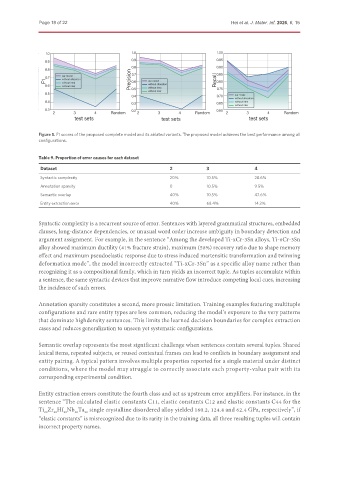
               Figure 5. F1 scores of the proposed complete model and its ablated variants. The proposed model achieves the best performance among all
               configurations.


               Table 9. Proportion of error causes for each dataset
               Dataset                                       2            3               4
               Syntactic complexity                          20%          10.5%           28.6%
               Annotation sparsity                           0            10.5%           9.5%
               Semantic overlap                              40%          10.5%           47.6%
               Entity extraction error                       40%          68.4%           14.3%


               Syntactic complexity is a recurrent source of error. Sentences with layered grammatical structures, embedded
               clauses, long-distance dependencies, or unusual word order increase ambiguity in boundary detection and
               argument assignment. For example, in the sentence “Among the developed Ti-xCr-3Sn alloys, Ti-6Cr-3Sn
               alloy showed maximum ductility (41% fracture strain), maximum (58%) recovery ratio due to shape memory
               effect and maximum pseudoelastic response due to stress induced martensitic transformation and twinning
               deformation mode”, the model incorrectly extracted “Ti-xCr-3Sn” as a specific alloy name rather than
               recognizing it as a compositional family, which in turn yields an incorrect tuple. As tuples accumulate within
               a sentence, the same syntactic devices that improve narrative flow introduce competing local cues, increasing
               the incidence of such errors.


               Annotation sparsity constitutes a second, more prosaic limitation. Training examples featuring multituple
               configurations and rare entity types are less common, reducing the model’s exposure to the very patterns
               that dominate highdensity sentences. This limits the learned decision boundaries for complex extraction
               cases and reduces generalization to unseen yet systematic configurations.

               Semantic overlap represents the most significant challenge when sentences contain several tuples. Shared
               lexical items, repeated subjects, or reused contextual frames can lead to conflicts in boundary assignment and
               entity pairing. A typical pattern involves multiple properties reported for a single material under distinct
               conditions, where the model may struggle to correctly associate each property-value pair with its
               corresponding experimental condition.

               Entity extraction errors constitute the fourth class and act as upstream error amplifiers. For instance, in the
               sentence “The calculated elastic constants C11, elastic constants C12 and elastic constants C44 for the
               Ti Zr Hf Nb Ta  single crystalline disordered alloy yielded 160.2, 124.4 and 62.4 GPa, respectively”, if
                    20
                       20
                 20
                               20
                           20
               “elastic constants” is misrecognized due to its rarity in the training data, all three resulting tuples will contain
               incorrect property names.

