


Page 91 - Read Online
P. 91
Page 932                               Bisaccia et al. Extracell Vesicles Circ Nucleic Acids. 2025;6:921-36  https://dx.doi.org/10.20517/evcna.2025.88


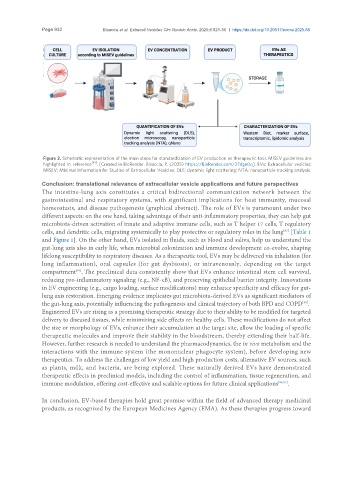
                Figure 2. Schematic representation of the main steps for standardization of EV production as therapeutic tool. MISEV guidelines are
                highlighted in  reference [87] . [Created in BioRender. Bisaccia, P. (2025) https://BioRender.com/37dge0q]. EVs: Extracellular vesicles;
                MISEV: Minimal Information for Studies of Extracellular Vesicles; DLS: dynamic light scattering; NTA: nanoparticle tracking analysis.

               Conclusion: translational relevance of extracellular vesicle applications and future perspectives
               The intestine-lung axis constitutes a critical bidirectional communication network between the
               gastrointestinal and respiratory systems, with significant implications for host immunity, mucosal
               homeostasis, and disease pathogenesis (graphical abstract). The role of EVs is paramount under two
               different aspects: on the one hand, taking advantage of their anti-inflammatory properties, they can help gut
               microbiota-driven activation of innate and adaptive immune cells, such as T helper 17 cells, T regulatory
                                                                                                 [83]
               cells, and dendritic cells, migrating systemically to play protective or regulatory roles in the lung  [Table 1
               and Figure 1]. On the other hand, EVs isolated in fluids, such as blood and saliva, help us understand the
               gut-lung axis also in early life, when microbial colonization and immune development co-evolve, shaping
               lifelong susceptibility to respiratory diseases. As a therapeutic tool, EVs may be delivered via inhalation (for
               lung inflammation), oral capsules (for gut dysbiosis), or intravenously, depending on the target
                           [84]
               compartment . The preclinical data consistently show that EVs enhance intestinal stem cell survival,
               reducing pro-inflammatory signaling (e.g., NF-κB), and preserving epithelial barrier integrity. Innovations
               in EV engineering (e.g., cargo loading, surface modifications) may enhance specificity and efficacy for gut-
               lung axis restoration. Emerging evidence implicates gut microbiota-derived EVs as significant mediators of
               the gut-lung axis, potentially influencing the pathogenesis and clinical trajectory of both BPD and COPD .
                                                                                                       [85]
               Engineered EVs are rising as a promising therapeutic strategy due to their ability to be modified for targeted
               delivery to diseased tissues, while minimizing side effects on healthy cells. These modifications do not affect
               the size or morphology of EVs, enhance their accumulation at the target site, allow the loading of specific
               therapeutic molecules and improve their stability in the bloodstream, thereby extending their half-life.
               However, further research is needed to understand the pharmacodynamics, the in vivo metabolism and the
               interactions with the immune system (the mononuclear phagocyte system), before developing new
               therapeutics. To address the challenges of low yield and high production costs, alternative EV sources, such
               as plants, milk, and bacteria, are being explored. These naturally derived EVs have demonstrated
               therapeutic effects in preclinical models, including the control of inflammation, tissue regeneration, and
               immune modulation, offering cost-effective and scalable options for future clinical applications [86,87] .


               In conclusion, EV-based therapies hold great promise within the field of advanced therapy medicinal
               products, as recognized by the European Medicines Agency (EMA). As these therapies progress toward

