


Page 84 - Read Online
P. 84
Bisaccia et al. Extracell Vesicles Circ Nucleic Acids. 2025;6:921-36  https://dx.doi.org/10.20517/evcna.2025.88                                   Page 925

               Table 2. Overview of selected clinical trials using EVs derived from stem cells for the treatment of pediatric diseases
                Disease Source of EVs     Name of the preparation Clinical trial ID Route of administration Status of the trial
                BPD   Human bone marrow MSC  UNEX-42         NCT03857841  Intravenous       Terminated
                      Human Umbilical Cord MSC  EXOB-001     NCT06279741  Endotracheal      Recruiting
                IBD   Human bone marrow MSC  ExoFlo          NCT05130983  Intravenous       Terminated

               The table shows the target disease, the source and name of the EV preparation, clinical trial ID, route of administration, and current trial status.
               The trials primarily focus on BPD and IBD. Data were obtained from the NIH Clinical Trials Database (https://clinicaltrials.gov/). EVs:
               Extracellular vesicles; MSC: mesenchymal stem cell; BPD: bronchopulmonary dysplasia; IBD: inflammatory bowel disease; NIH: National Institutes
               of Health; ID: identifier.


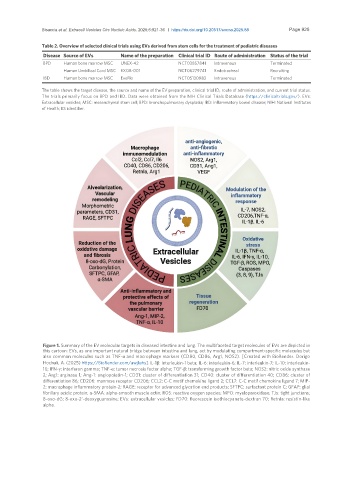
                Figure 1. Summary of the EV molecular targets in diseased intestine and lung. The multifaceted target molecules of EVs are depicted in
                this cartoon: EVs, as one important natural bridge between intestine and lung, act by modulating compartment-specific molecules but
                also common molecules such as TNF-α and macrophage markers (CD80, CD86, Arg1, NOS2). [Created with BioRender. Dorigo
                Hochuli, A. (2025) https://BioRender.com/awjluhs].  IL-1β: Interleukin-1 beta; IL-6: interleukin-6; IL-7: interleukin-7; IL-10: interleukin-
                10; IFN-γ: interferon gamma; TNF-α: tumor necrosis factor alpha; TGF-β: transforming growth factor beta; NOS2: nitric oxide synthase
                2; Arg1: arginase 1; Ang-1: angiopoietin-1; CD31: cluster of differentiation 31; CD40: cluster of differentiation 40; CD86: cluster of
                differentiation 86; CD206: mannose receptor CD206; CCL2: C-C motif chemokine ligand 2; CCL7: C-C motif chemokine ligand 7; MIP-
                2: macrophage inflammatory protein-2; RAGE: receptor for advanced glycation end products; SFTPC: surfactant protein C; GFAP: glial
                fibrillary acidic protein; α-SMA: alpha-smooth muscle actin; ROS: reactive oxygen species; MPO: myeloperoxidase; TJs: tight junctions;
                8-oxo-dG: 8-oxo-2’-deoxyguanosine; EVs: extracellular vesicles; FD70: fluorescein isothiocyanate-dextran 70; RetnIa: resistin-like
                alpha.

