


Page 46 - Read Online
P. 46
Page 315                                    Gaspari et al. Extracell Vesicles Circ Nucleic Acids. 2026;7:302-27


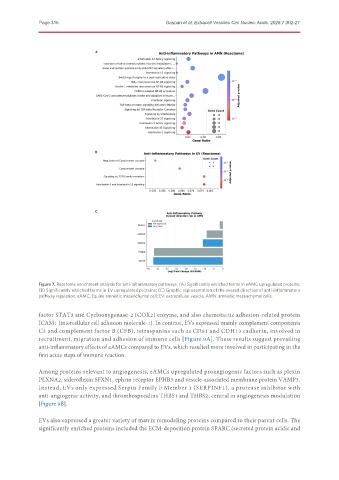
               Figure 7. Reactome enrichment analysis for anti-inflammatory pathways. (A) Significantly enriched terms in eAMC upregulated proteins;
               (B) Significantly enriched terms in EV upregulated proteins; (C) Graphic representation of the overall direction of anti-inflammatory
               pathway regulation. eAMC: Equine amniotic mesenchymal cell; EV: extracellular vesicle; AMN: amniotic mesenchymal cells.


               factor STAT3 and Cyclooxygenase-2 (COX2) enzyme, and also chemotactic adhesion-related protein
               ICAM1 (intercellular cell adhesion molecule-1). In contrast, EVs expressed mainly complement components
               C3 and complement factor B (CFB), tetraspanins such as CD81 and CDH13 cadherin, involved in
               recruitment, migration and adhesion of immune cells [Figure 9A]. These results suggest prevailing
               anti-inflammatory effects of eAMCs compared to EVs, which resulted more involved in participating in the
               first acute steps of immune reaction.

               Among proteins relevant to angiogenesis, eAMCs upregulated proangiogenic factors such as plexin
               PLXNA2, sideroflexin SFXN1, ephrin receptor EPHB3 and vesicle-associated membrane protein VAMP3.
               Instead, EVs only expressed Serpin Family F Member 1 (SERPINF1), a protease inhibitor with
               anti-angiogenic activity, and thrombospondins THBS1 and THBS2, central in angiogenesis modulation
               [Figure 9B].


               EVs also expressed a greater variety of matrix remodeling proteins compared to their parent cells. The
               significantly enriched proteins included the ECM-deposition protein SPARC (secreted protein acidic and

